
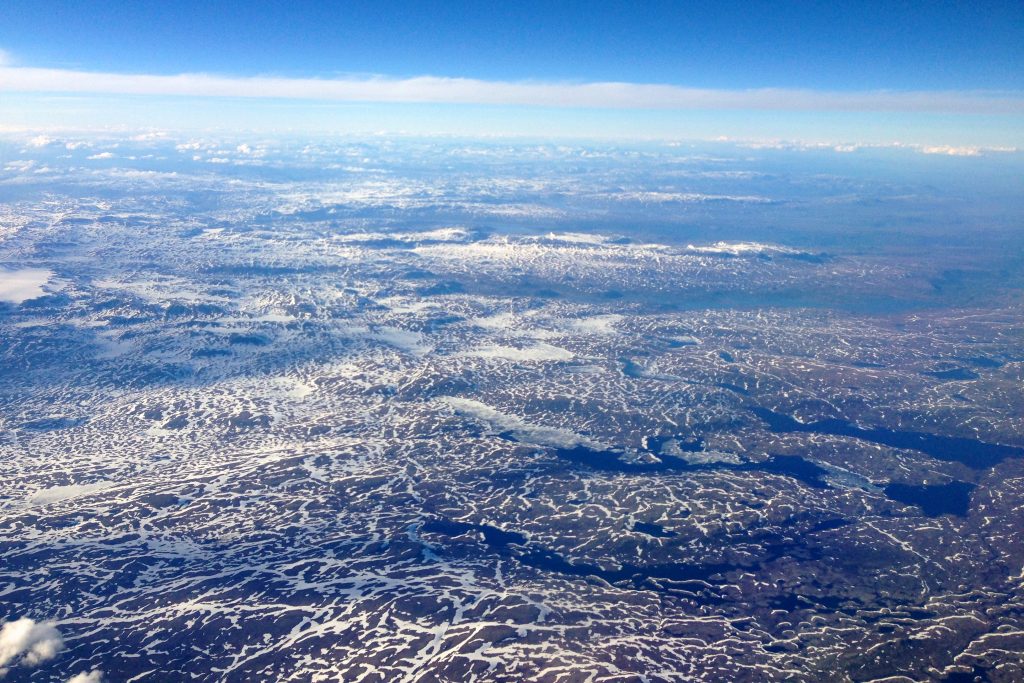
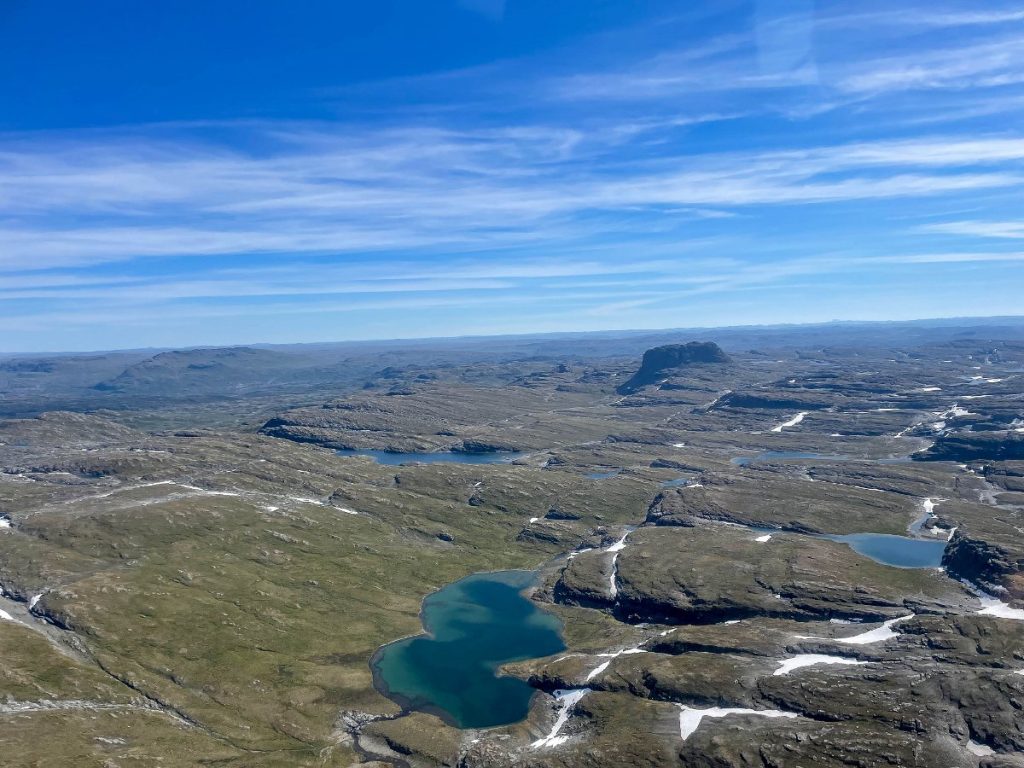
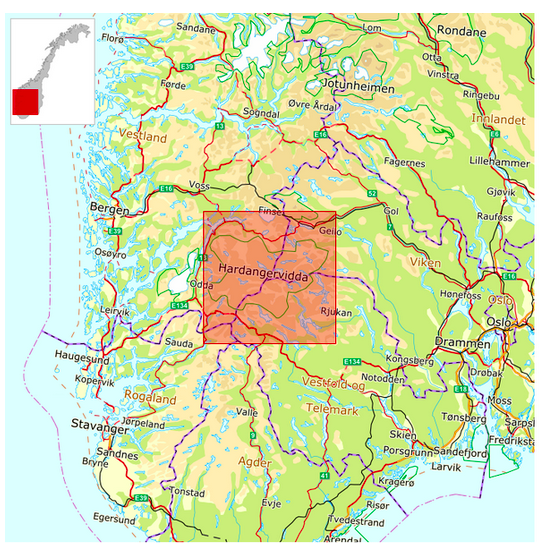
Hardangervidda is the largest mountain plateau (mountain “peneplain”) in Northern Europe — a vast, treeless highland of lakes, bogs, rock and low alpine vegetation. Much of the plateau is protected as Hardangervidda National Park (established 10 April 1981), covering roughly 3,400 km² and spanning several counties. It’s famous for having one of Europe’s largest wild reindeer herds, dramatic vistas, and for being a playground for hiking and skiing.
How the plateau formed — the deep-time story
Hardangervidda’s appearance today is shaped by very long processes. The bedrock is ancient, but the plateau’s smooth, rounded forms and scattered lakes are the result of repeated glaciations during the Quaternary (the Ice Ages). Glaciers scoured the landscape, carved valleys, and deposited moraine; after the ice retreated the terrain settled into the broad, open moorland we now call the vidda. Differences between the wetter, rockier west and the flatter, more vegetated east reflect local geology and how ice flowed across the plateau.
Hardangervidda has been used by people for thousands of years. Archaeologists have found hunting stations, stone hut remains, and middens with large quantities of reindeer bone — evidence that people performed large-scale communal drives and processing of reindeer long before modern times. These sites show highly organized hunting techniques (funnel systems, pitfalls and drives) that could catch many animals at once. Some finds on nearby high plateaus and ice-edge sites date to the Iron Age and earlier, and new discoveries occasionally appear as ice and permafrost melt.
During the Viking Age the plateau and its passes were part of regional movement, seasonal hunting, and resource-gathering networks rather than major permanent settlements. Vikings — who were as much farmers, traders and hunters as raiders — used mountain routes to move livestock, trade, and access summer grazing and hunting grounds. Hardangervidda’s reindeer and other high-mountain resources were valuable: reindeer provided meat, hides and antlers (for tools and ornament), and the plateau’s passes connected fjord communities with inland valleys. Archaeological evidence emphasizes hunting infrastructure rather than battlefield stories — the vidda was a practical landscape of subsistence and seasonal mobility.
From commons to protected park — how it became what it is now
Over centuries, Hardangervidda was a shared resource zone: summer pastures, hunting grounds, and winter routes. With industrialization, tourism, and modern land use (roads, hydropower development in surrounding valleys, and later recreational infrastructure), pressures on habitats and reindeer migration paths increased. In response, Norway established Hardangervidda National Park in 1981 to protect core areas of the plateau, conserve wildlife (especially wild reindeer), and to manage recreation and traditional uses in a sustainable way. Management remains a balance: conservation, reindeer husbandry rights, outdoor recreation, and local interests all factor into decisions.
Wildlife and conservation today
The plateau supports unique alpine flora and fauna — lichens, mosses, dwarf shrubs, ptarmigan, waders, and the famous wild reindeer. The Hardangervidda wild reindeer population has fluctuated dramatically over decades due to hunting, weather, and management choices; conservation and management remain active and sometimes contentious topics (for example around habitat loss, tourism infrastructure and population control). There are also targeted conservation efforts for vulnerable species that depend on the plateau ecosystem (e.g., Arctic fox programs). Climate change, changing snow/icing patterns, and increasing recreational pressure are modern challenges for managers and herders alike.
What visitors can expect now
Hardangervidda is open for recreation year-round but changes character strongly with the seasons.Summer (June–September): long daylight, accessible trails, many lakes for fishing, and the classic long-distance hikes. Expect boggy sections, sudden weather shifts, and exposed tundra. Popular day-hikes and destinations on or near the vidda include Trolltunga (on the edge of the Hardanger region) and numerous DNT (Norwegian Trekking Association) cabins scattered across routes. Mountain huts, marked trails and route networks make multi-day treks feasible, but weather preparation and map/GPS skills are essential.
Autumn: dramatic colors, fewer tourists, but weather becomes unpredictable quickly; good for solitude and photography if you’re well equipped.
Winter and spring: the plateau is a top area for cross-country and ski touring; travel becomes a winter expedition — strong cold, long nights, and avalanche awareness near steep slopes. Snowmobile and ski-use regulations vary by area.
Safety notes: mountain weather can change rapidly — carry warm layers, waterproofs, map/compass or reliable GPS, and tell someone your plan. In popular sections (e.g., Trolltunga) follow local guidance and be prepared for heavy foot traffic in high season, and for guided tours if you prefer company and extra safety. Rescue services are active and trails are signposted in many parts, but remote stretches require self-reliance.
Practical tips for visiting
Huts and routes: The DNT network provides many staffed and self-service huts — book or plan accordingly. Some iconic hikes (like Trolltunga) require planning for transport, parking and safety.
Timing: July–August for easiest conditions and full hut services; May and September for fewer people but more unpredictable weather.
Gear: sturdy boots, layered clothing, rainproof shell, map/GPS, water filter, and basic first-aid. For multi-day trips a good sleeping system and stove are essential.
Respect wildlife and reindeer herders: keep distance, avoid disturbing calving/migration corridors, and follow park rules about dogs and camping.
Hardangervidda is a place where deep-time geology, millennia of human use, and present-day conservation meet. It’s quiet at scale — rolling horizons, wind across lichens, and seasonal migrations that link past and present. For visitors the plateau offers raw, open space: challenging weather, wildlife encounters, and the satisfaction of a landscape that still feels a little bit primeval. Come prepared, tread lightly, and you’ll see why generations have relied on and been humbled by the vidda.