
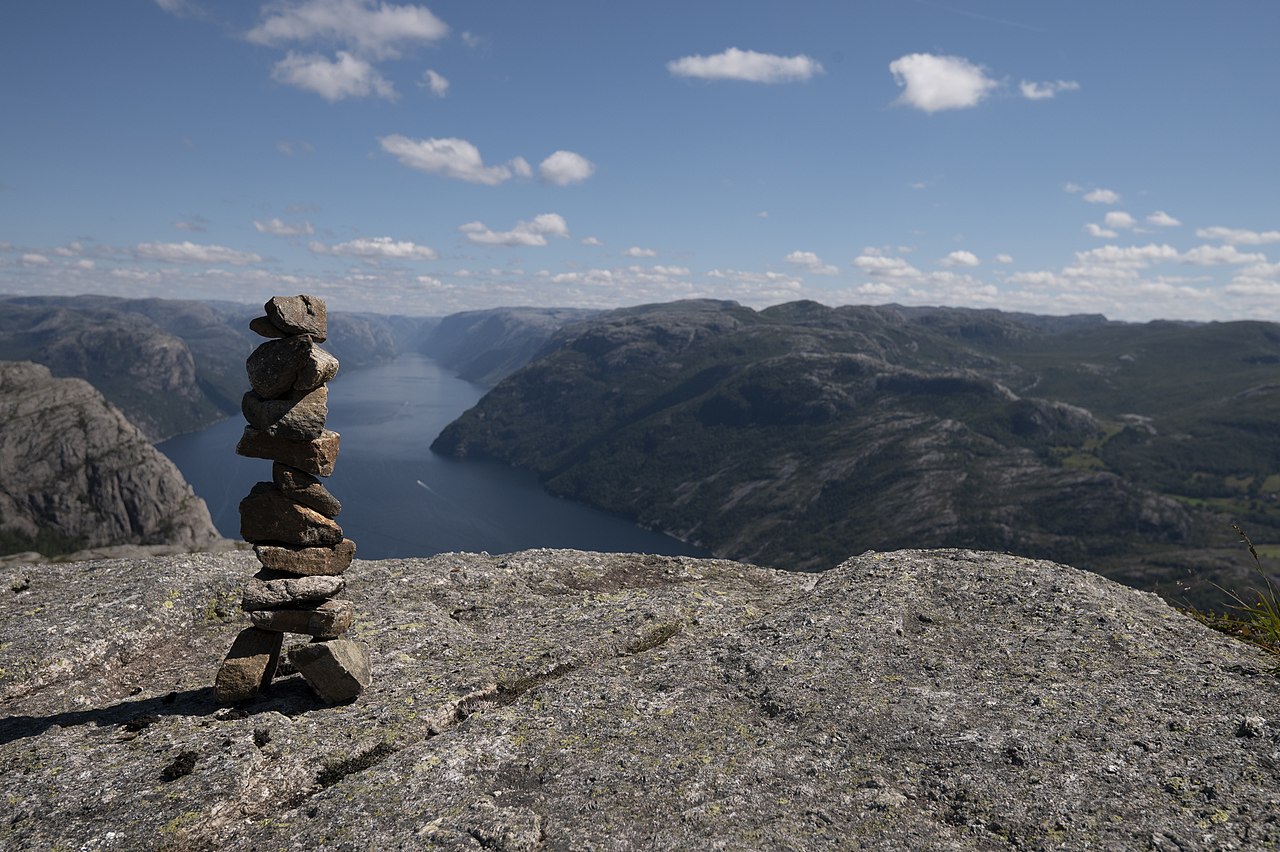
Geological Story: A Cliff Carved by Ice and Time
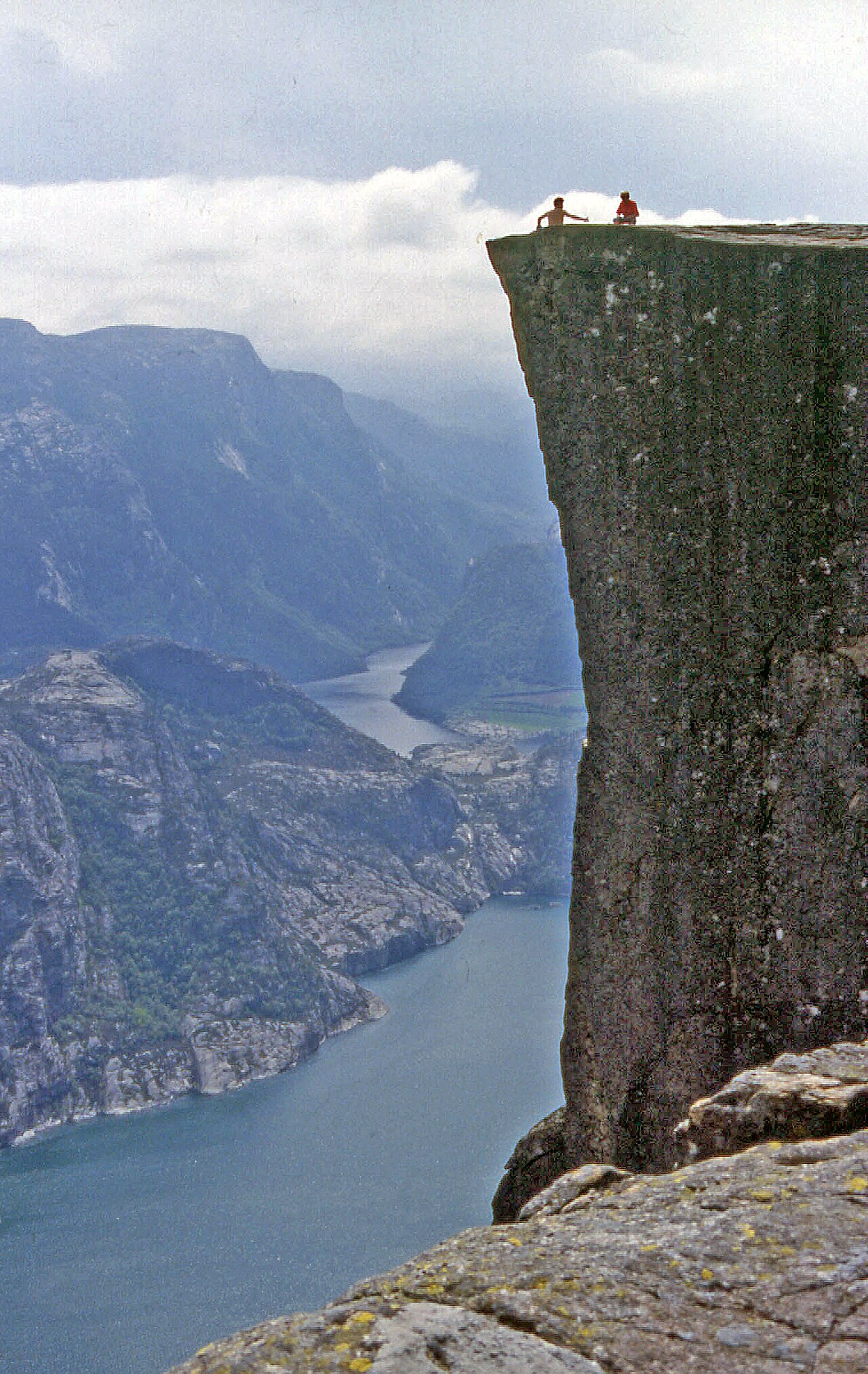
Preikestolen’s origins stretch back hundreds of millions of years, long before humans set foot in Norway. The cliff itself is composed of Precambrian gneiss, a metamorphic rock formed under intense heat and pressure deep within the Earth’s crust. Over eons, tectonic forces pushed these ancient layers upward, creating the foundation of what would become one of Norway’s most famous mountains. But the real sculptor of Preikestolen was ice. During the last Ice Age, massive glaciers advanced and retreated across Scandinavia, grinding down the landscape with relentless force. As the ice moved, it plucked away weaker rock, leaving behind the sheer, vertical face of the cliff. The flat summit—a rarity in nature—was likely shaped by frost weathering, where water seeped into cracks, froze, and gradually broke apart the rock until only a smooth plateau remained. Today, Preikestolen stands as a testament to the power of natural forces, a geological masterpiece that has captivated visitors for generations.Why Preikestolen Captivates Visitors
What makes Preikestolen so special? It’s not just the breathtaking views—though those alone would be worth the journey. It’s the combination of accessibility, adventure, and sheer awe that sets this destination apart in the world of Norway hiking.- The Iconic View: Few sights compare to gazing down from Preikestolen’s edge, where Lysefjorden snakes through the landscape like a ribbon of blue, framed by rugged mountains. On clear days, the vista stretches for miles, offering a perspective that feels almost surreal.
- A Hike for All Levels: Unlike some of Norway’s more remote or technical trails, Preikestolen is accessible to most hikers with a moderate level of fitness. The 3.8-kilometre (2.4 mi) trail to the summit is well-maintained, with stone steps and safety improvements added by Nepalese Sherpas in 2013 to handle the growing number of visitors.
- Adrenaline and Adventure: For thrill-seekers, Preikestolen is a hotspot for BASE jumping, with daredevils leaping from the cliff’s edge into the void below. Even if you’re not jumping, the sense of exposure at the summit—where the ground drops away abruptly—creates an exhilarating rush.
- Cultural Significance: The name “Preikestolen” (meaning “Pulpit Rock”) hints at its historical role as a natural gathering place. While there’s no record of sermons being delivered from the cliff, its imposing presence has long inspired awe and reverence in those who visit.
Access Today: How to Visit Preikestolen
Reaching Preikestolen is part of the adventure, with several routes and entry points leading to the trailhead. Here’s what you need to know to plan your visit:Getting There: Entry Points and Transportation
- From Stavanger (Most Common Route):
- Take a ferry from Stavanger to Tau (40 minutes), then a bus (Line 100) to Preikestolen Fjellstue, the trailhead (30 minutes).
- Alternatively, drive from Stavanger to the Preikestolen parking lot (approx. 1 hour, including a ferry crossing).
- From Other Nearby Towns:
- Sandnes and Forsand also offer bus connections to the trailhead, though Stavanger remains the most convenient hub.
- Seasonal Considerations:
- The trail is open year-round, but winter hiking requires proper equipment (crampons, ice axes) and experience due to snow and ice.
- Summer (June–August) is peak season, with long daylight hours and milder weather—ideal for Norway hiking but also the busiest time.
The Hike: What to Expect on the Trail
The 3.8-kilometre (2.4 mi) hike to Preikestolen is a 4-hour round trip (2 hours up, 1.5–2 hours down), with an elevation gain of about 350 metres (1,150 ft). The trail is well-marked and maintained, but it’s no walk in the park—expect steep sections, rocky terrain, and some scrambling.- Trail Conditions:
- The path starts with a gentle incline through forested areas before steepening as you ascend.
- Stone steps and chains assist hikers in the steeper sections, thanks to the 2013 trail improvements by Nepalese Sherpas.
- Near the summit, the trail flattens out, offering a chance to catch your breath before the final push to the cliff’s edge.
- Crowds and Timing:
- Start early (6–7 AM) to avoid crowds and secure parking. Late afternoon hikes are also less busy but may mean descending in the dark during shorter days.
- Weekdays are quieter than weekends, especially in summer.
- At the Summit:
- The flat plateau is larger than it appears in photos, but the edges are unguarded—exercise caution, especially with children or in windy conditions.
- Take time to explore the summit’s different viewpoints, each offering a unique perspective of Lysefjorden.
Practical Tips for Hikers
Preikestolen is a rewarding but demanding hike, and proper preparation is key to a safe and enjoyable experience. Here’s what you need to know before you go:- Physical Fitness: While the trail is accessible to most, it’s not a casual stroll. Ensure you’re comfortable with steep inclines, uneven terrain, and a 4-hour commitment. If you’re new to hiking, consider training on shorter trails beforehand.
- Proper Footwear: Sturdy hiking boots with ankle support are a must. The trail is rocky and can be slippery, especially in wet conditions. Avoid sneakers or sandals—they won’t provide enough grip or protection.
- Weather Preparedness: Norwegian weather is unpredictable, even in summer. Check the forecast before you go, and pack layers—windproof jackets, warm mid-layers, and moisture-wicking base layers. Rain gear is essential, as sudden showers are common.
- Food and Water: Bring at least 1.5–2 litres of water per person, as there are no reliable water sources on the trail. Pack high-energy snacks (nuts, dried fruit, chocolate) and a packed lunch to enjoy at the summit.
- Navigation and Safety:
- The trail is well-marked with red T’s painted on rocks, but a map or GPS app (like Maps.me or AllTrails) is useful for backup.
- Mobile coverage is spotty—don’t rely on your phone for navigation or emergencies. Let someone know your plans before you set out.
- In winter, the trail is only recommended for experienced hikers with proper gear (crampons, ice axes) and knowledge of avalanche risks.
- Respect the Environment: Preikestolen is a fragile ecosystem, and the increasing number of visitors puts pressure on the trail and surrounding nature. Follow Leave No Trace principles:
- Pack out all trash—there are no bins on the trail.
- Stay on marked paths to avoid damaging vegetation.
- Use designated toilets at the trailhead—no facilities are available on the hike.
- Photography Tips: The best light for photos is early morning or late afternoon, when the sun casts a golden glow over the fjord. A wide-angle lens captures the full grandeur of the cliff, while a polarizing filter enhances the blues of the water and sky.
Beyond Preikestolen: Exploring Rogaland’s Wild Side
While Preikestolen is the star attraction, Rogaland county offers plenty of other adventures for those eager to explore Norway’s outdoor wonders. Consider extending your trip with these nearby gems:- Kjeragbolten: A 5-kilometre (3.1 mi) hike to a boulder wedged between two cliffs, 1,000 metres above Lysefjorden. The trail is more challenging than Preikestolen but rewards hikers with stunning views and a thrilling photo op (if you dare to step onto the boulder!).
- Lysefjorden Cruise: See Preikestolen from the water on a scenic fjord cruise from Stavanger or Lauvvik. The boat ride offers a unique perspective of the cliff and other geological formations, like the Hengjanefossen waterfall.
- Stavanger Old Town: Wander the cobblestone streets of Gamle Stavanger, one of Europe’s best-preserved wooden house districts. Visit the Norwegian Petroleum Museum or the Stavanger Cathedral for a taste of local history and culture.
- Månafossen: Norway’s tallest waterfall (92 metres) is a short drive from Stavanger. A 1.5-kilometre hike leads to the base of the falls, where you can feel the mist and hear the roar of the water.
Final Thoughts: Why Preikestolen Belongs on Your Bucket List
Standing atop Preikestolen is more than just a hike—it’s a rite of passage for adventurers, a moment where the raw beauty of Norway’s mountains and fjords crashes over you like a wave. The climb may test your legs and lungs, but the reward is unmatched: a view that stretches beyond the horizon, a sense of accomplishment that lingers, and the knowledge that you’ve stood where countless others have been humbled by nature’s grandeur. Whether you’re drawn by the challenge of the trail, the thrill of the cliff’s edge, or the sheer majesty of Lysefjorden, Preikestolen is a destination that exceeds expectations. It’s a place where memories are made, where the spirit of Northern Europe’s outdoor culture comes alive, and where every step reminds you why Norway hiking is an experience like no other. So lace up your boots, pack your camera, and set out for one of the world’s most iconic cliffs. Preikestolen isn’t just a hike—it’s an adventure that will stay with you forever.⛰
Keep the Trails Alive
Summit Climbs is free — no ads, no paywalls, no sponsored fluff.
Every guide is written from real experience to help your next adventure.
If it helped, a small support means the world and keeps the site running.