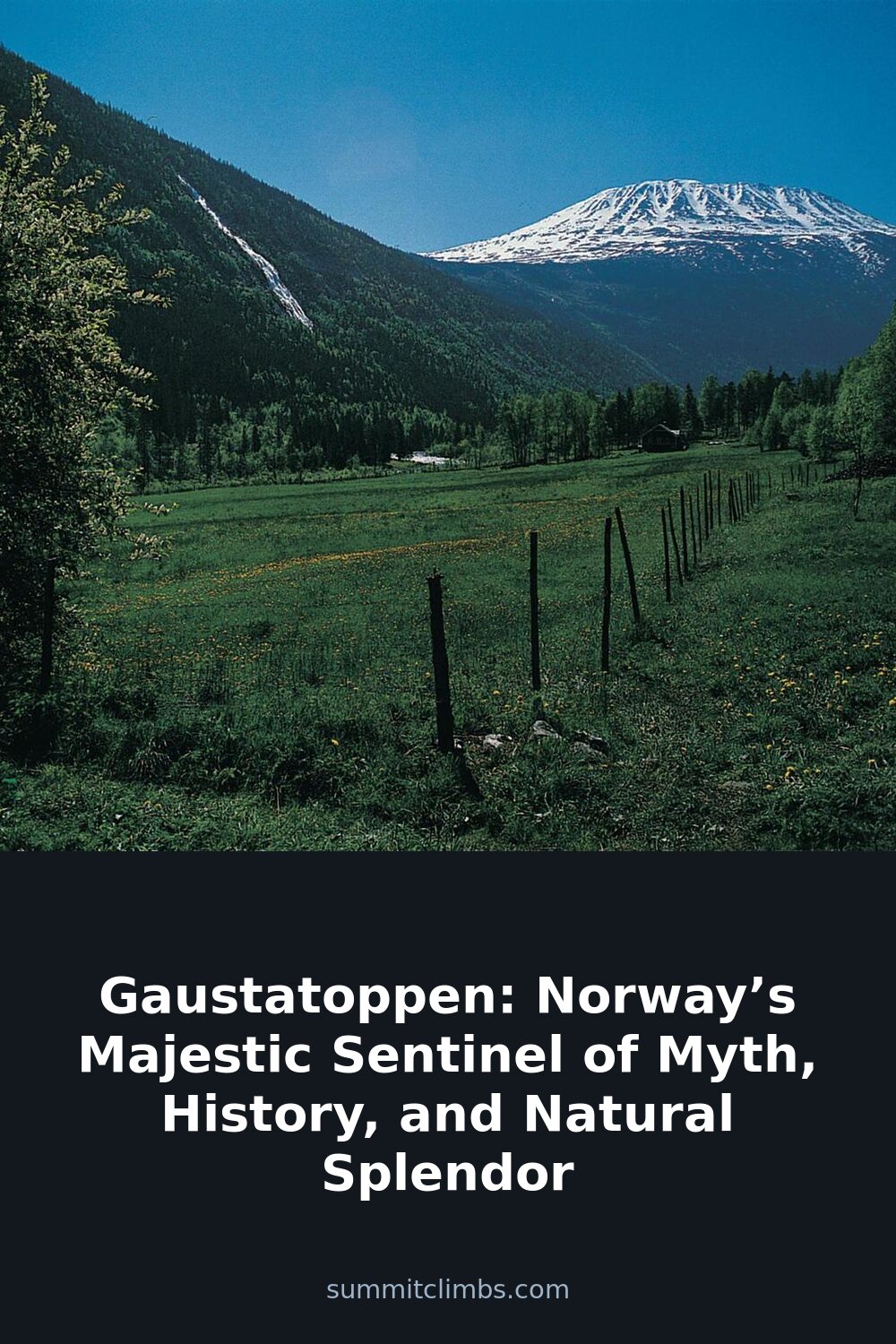
SummitClimbs Field Note: Gaustatoppen rises to 1,883 meters in Telemark, and its silhouette is the kind you remember long after the trip ends. This is a mountain with genuine depth—mythology, Viking assembly sites, wartime resistance—but also a practical alpine objective that demands respect for weather and route choice. The summit view, on a clear day, takes in roughly one-sixth of Norway. That’s not a marketing line; it’s a fact of geography.
Why This Place Belongs on a Norway Mountain Plan
Norway has no shortage of iconic peaks, but Gaustatoppen holds a particular place in the national psyche. It’s not just a hiking objective; it’s a landmark that has anchored stories for centuries. The mountain appears in Norse legends as a dwelling of giants, later in Viking sagas as a gathering site for things—the assemblies where law and dispute were settled under open sky. In the 19th century, as Norwegian nationalism grew, artists and writers like Henrik Ibsen and Aasmund Olavsson Vinje turned to Gaustatoppen for metaphor and inspiration. During World War II, resistance fighters used its remote terrain for cover and observation. This is a mountain layered with meaning, but none of that matters if the approach doesn’t suit you. We’ll get to that.
The practical case is straightforward: the summit offers one of the most expansive views in Scandinavia, the main trail is well-established, and the Gaustabanen cable car provides an alternative ascent through the mountain’s interior. Whether you’re here for the history, the flora, or the panorama, Gaustatoppen delivers without requiring extreme technical skill—provided you come prepared.
The SummitClimbs Snapshot
- Elevation: 1,883 m (6,178 ft)
- Location: Telemark, southern Norway
- First recorded ascent: 1810 by botanist Christen Smith
- Best season: June–September for hiking; winter for skiing and snowshoeing
- Key route: Well-marked trail from the tourist lodge; steep sections near the top
- Alternative access: Gaustabanen cable car (Cold War-era, runs through the mountain)
- Summit view: On clear days, roughly one-sixth of Norway is visible
- Suitable for: Fit hikers comfortable with exposure and variable weather; cable car option suits those with less time or desire for a technical climb
Route Reality and Local Conditions
The classic hike to Gaustatoppen starts from the Gaustatoppen Turisthytte, a lodge that also houses exhibits on the mountain’s history. The trail is well-marked but should not be underestimated. The lower sections wind through birch forest and rocky terrain; higher up, the path becomes steeper and more exposed, especially near the summit ridge. Scrambling over loose rock is required in places, and the weather can shift from calm to aggressive in under an hour. This is not a walk in the park—it’s a genuine mountain day.
For those who prefer a less strenuous approach, the Gaustabanen cable car is a unique alternative. Built as a military project during the Cold War, it runs through a tunnel inside the mountain and emerges near the summit. The ride itself is an experience: you travel through the mountain’s core, then step out onto the high plateau. It’s a practical option if weather windows are tight or if you’re traveling with people who aren’t up for the full climb. That said, it’s not a substitute for understanding the summit environment—conditions at the top can be severe even if the valley is calm.
Winter brings a different set of options. Ski touring and snowshoeing are popular, but avalanche terrain exists, and route-finding requires local knowledge. The Gaustabanen operates in winter as well, which can shorten approaches significantly. If you’re planning a winter ascent, check conditions with the lodge and carry proper gear. This is not the place to improvise.
What to Watch For
Weather and timing. The summit is often clouded in. Visibility can drop to near-zero without warning, and wind speeds pick up dramatically above treeline. Start early, carry layers, and be ready to turn around. The view of one-sixth of Norway is only available on clear days; don’t assume you’ll get it.
Routefinding above treeline. The trail is marked with cairns, but in mist or snow, those cairns can be hard to spot. A GPS device or map and compass are non-negotiable. Phone reception is unreliable.
Exposure near the summit. The final push involves some scrambling on loose rock. The exposure is real, and a fall in the wrong place would be serious. If you’re uncomfortable with that kind of terrain, the cable car is the better option.
Cultural sensitivity. Gaustatoppen is not just a hiking destination; it’s a site with deep historical and spiritual significance. The summit area contains remnants of military installations from the Cold War. Treat the landscape with respect, and avoid disturbing any structures or markers.
Local advice. The Gaustatoppen Turisthytte staff know the mountain well. Ask them about current conditions before heading up. They can also point you to guided tours if you want to learn more about the mountain’s history—from Viking assemblies to resistance hideouts to its role in Norwegian national identity.
The SummitClimbs Take
Gaustatoppen earns its reputation. It’s a mountain with genuine historical weight, a solid physical challenge, and a view that, on the right day, justifies every step. But it’s not a place to treat casually. The weather is the real decision-maker here, and the route demands fitness and comfort with exposure. If you’re prepared for those realities, Gaustatoppen will reward you with one of the most memorable summit experiences in southern Norway.
For the less experienced or those short on time, the Gaustabanen cable car provides a practical alternative that doesn’t sacrifice the summit experience. For everyone else, the hike is the way to go—just respect the mountain’s mood, and don’t push when the clouds drop. Gaustatoppen will still be there tomorrow.
Keep the Trails Alive
Summit Climbs is free — no ads, no paywalls, no sponsored fluff.
Every guide is written from real experience to help your next adventure.
If it helped, a small support means the world and keeps the site running.