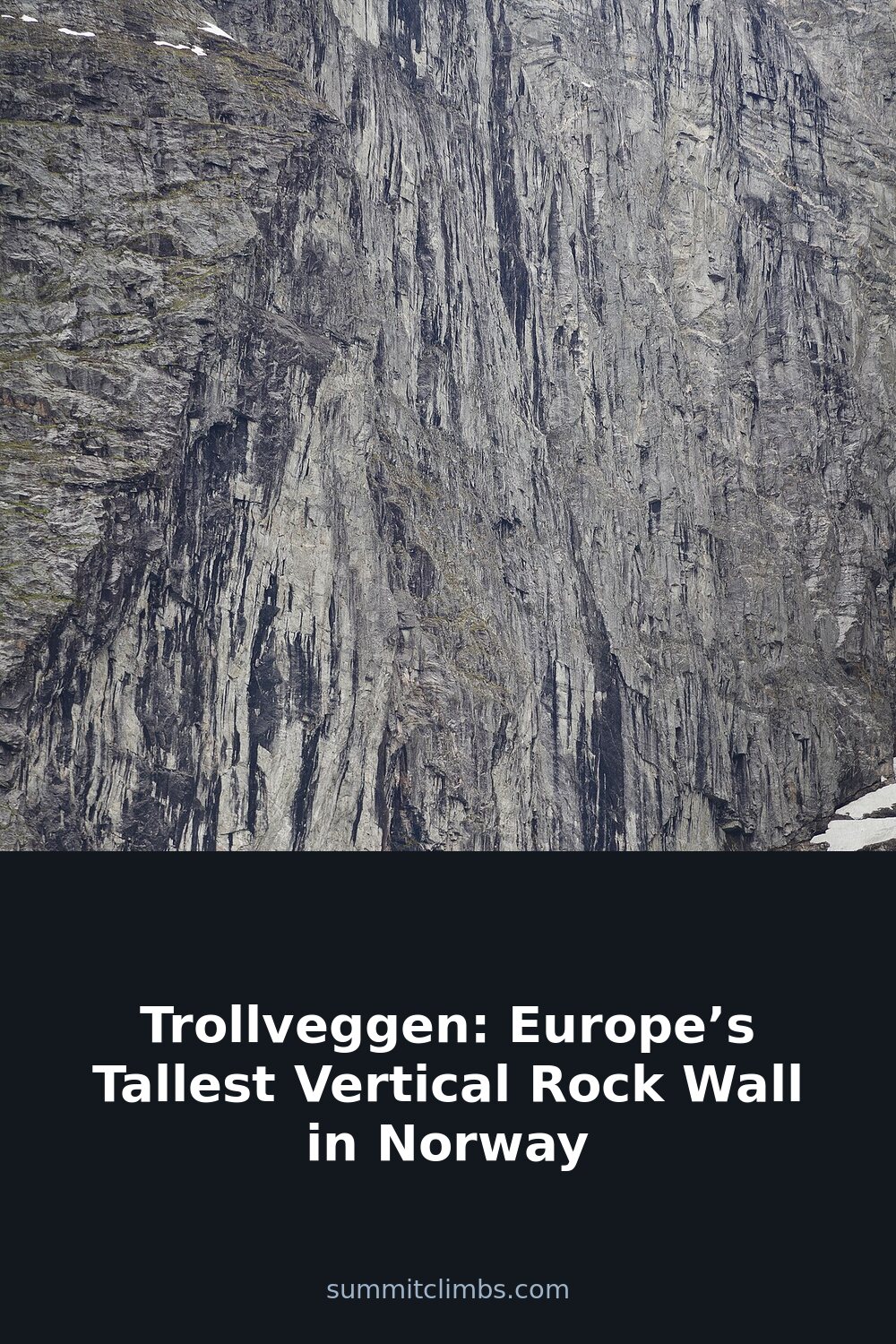
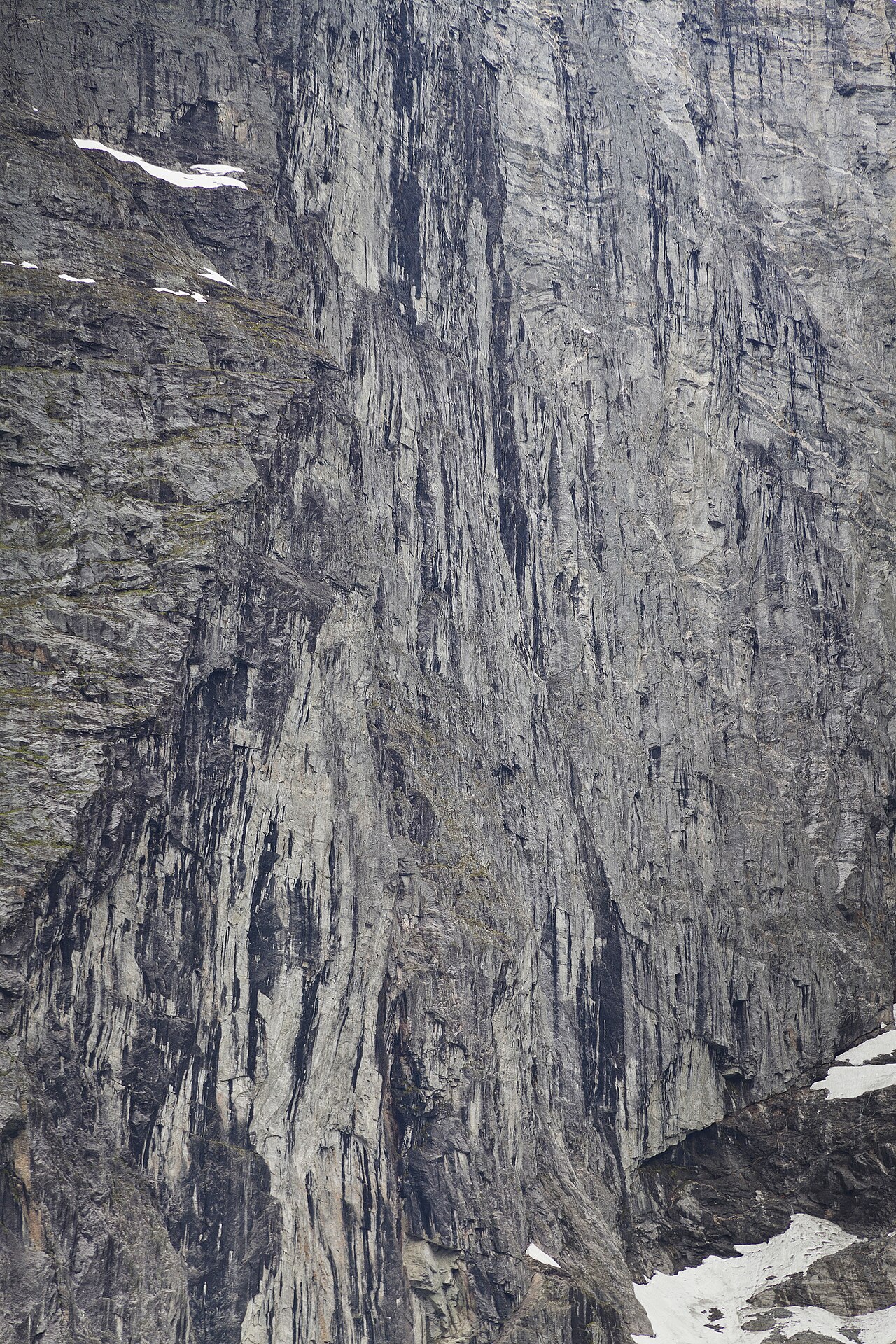
SummitClimbs Field Note: Trollveggen is not a place you stumble into. It dominates the Romsdalen valley with a vertical presence that resets your sense of scale. At roughly 1,700 meters from summit to valley floor, it holds the title of Europe’s tallest vertical rock wall. That number alone doesn’t prepare you for the moment you first see it—a near-plumb line of gneiss that looks less like a mountain feature and more like the edge of the world. This is a destination for people who take their mountain travel seriously, whether you’re here to climb, to hike, or simply to stand at the base and understand what “vertical” actually means.
Why This Place Belongs on a Norway Mountain Plan
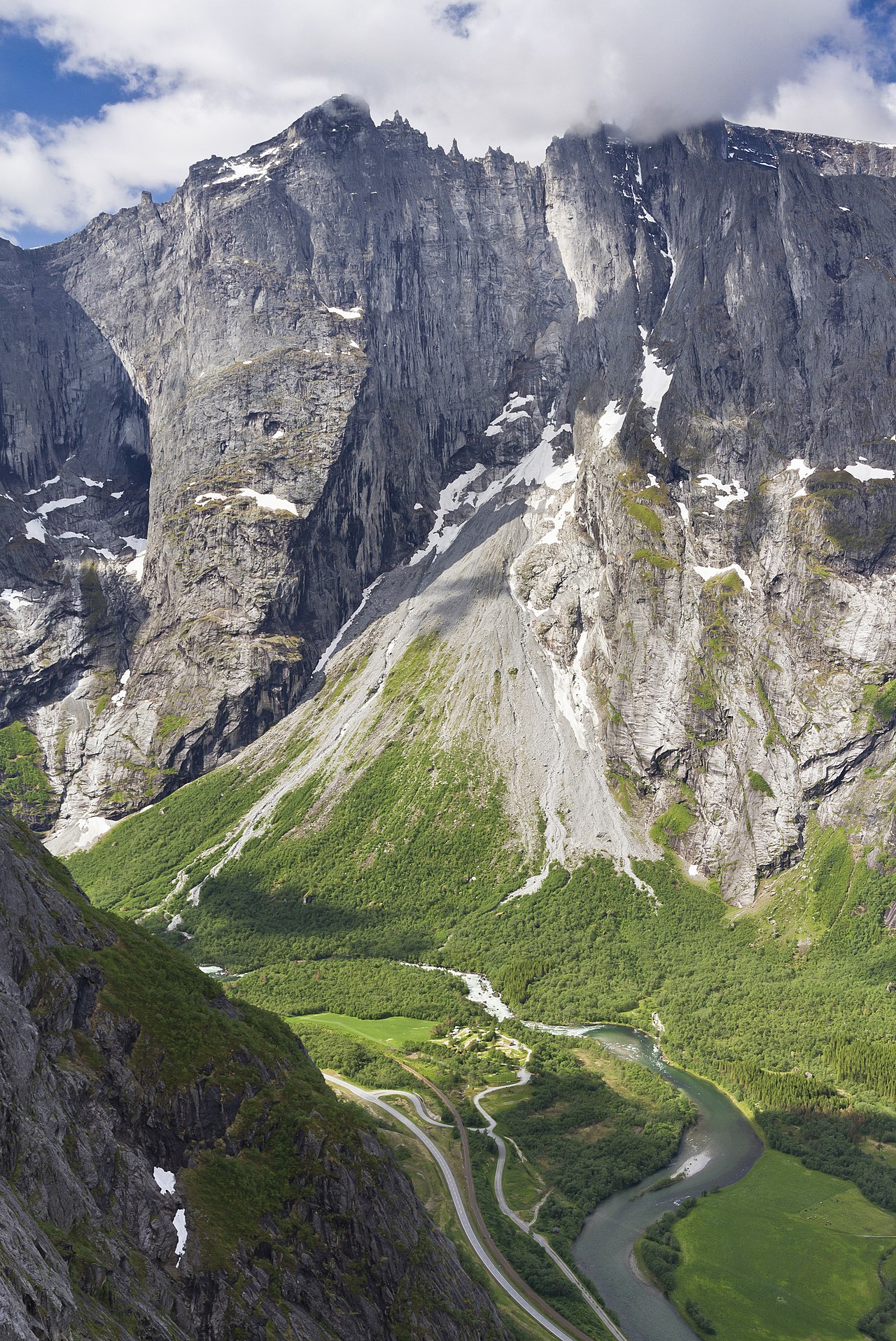
Norway has no shortage of dramatic landscapes, but Trollveggen sits in a category of its own. It is the centerpiece of the Trolltindene massif, a collection of peaks that define the skyline of Møre og Romsdal county. The wall’s formation is the work of ancient glaciers that carved the Romsdalen valley during the last Ice Age, leaving behind a face that rises almost straight up. The rock is primarily gneiss—metamorphic, weather-resistant, and capable of holding the kind of cracks and overhangs that make climbers return year after year.
For the non-climber, the wall is still a destination worth building a trip around. The sheer scale of it changes how you see the surrounding landscape. The Rauma River runs through the valley below. The Trollstigen road climbs the mountainside nearby. And the Romsdalseggen Ridge offers a hiking route that puts you level with the wall’s upper reaches. This is an area where the geology is not background scenery—it is the main event. If you are planning a Norway mountain itinerary, Trollveggen deserves a deliberate stop, not a drive-by.
The SummitClimbs Snapshot
- Location: Romsdalen valley, Møre og Romsdal county, Norway. Nearest town is Åndalsnes.
- Height: Approximately 1,700 meters from summit to valley floor. Europe’s tallest vertical rock wall.
- Rock type: Gneiss. Metamorphic, weather-resistant, with good friction and defined crack systems.
- First ascent: 1965 by a Norwegian team. The Rimmon Route remains the most famous line.
- Best season: June to September. Long daylight hours, milder temperatures, and accessible trails.
- Access: By car from Åndalsnes via the E136 toward Trollstigen. Also reachable by train on the Rauma Line from Dombås.
- Nearest airports: Molde (1.5 hours drive), Ålesund (2 hours drive). Car rental available at both.
- Protected area: Reinheimen National Park. Respect conservation rules.
Route Reality and Local Conditions
If you are a climber, you already know that Trollveggen is not a weekend project. The Rimmon Route is a multi-pitch climb that demands advanced technical skills, experience with big-wall logistics, and a high level of physical fitness. This is not a place to learn trad climbing or test new gear. The wall’s overhangs and exposure are relentless. Loose rock is a real hazard, and weather can shift without warning. Even in summer, temperatures drop quickly, and rain can turn a dry face into a dangerous one.
For hikers, the Romsdalseggen Ridge is the best way to experience the wall without ropes. The trail is steep and exposed in sections. It requires sturdy boots, sure footing, and a head for heights. The payoff is a view that puts you at eye level with the upper cliffs. The ridge is not a casual stroll—plan for a full day, carry extra layers, and start early to avoid afternoon weather.
The area around the base of the wall has several viewpoints and a seasonal visitor center with information on geology, climbing history, and local folklore. The Rauma River provides a good spot for a break, but do not underestimate the terrain. The ground near the wall is uneven, and loose rock is common. Stick to established paths and viewpoints.
If you want to climb but lack the experience for a free ascent, guided via ferrata tours are available out of Åndalsnes. These provide a safer way to experience the vertical environment, but they still require a reasonable fitness level and no fear of exposure. Book ahead, as slots fill quickly in peak season.
What to Watch For
Weather
The Romsdalen valley sees rapid weather shifts. A clear morning can turn into rain and wind by midday. Check the Norwegian Meteorological Institute forecast before you head out. Pack layers, a waterproof shell, and a hat. In summer, daylight lasts long, but temperatures can still drop into single digits Celsius at elevation.
Access and Transport
Åndalsnes is the main hub. By car, it is about 3.5 hours from Trondheim and 4 hours from Bergen. The Rauma Line train from Dombås is a scenic option, taking about 1.5 hours. Bus connections exist from Molde, Ålesund, and Trondheim, but frequencies are limited—plan ahead. Once in Åndalsnes, you will need a car or taxi to reach the wall. Parking areas near the wall are marked but fill early on summer weekends.
Safety
Trollveggen is a serious climbing destination. If you are not climbing, stay on designated viewpoints and trails. Do not approach the edge of the wall—loose rock and sudden drops make this extremely dangerous. Cell service is unreliable in the valley. Carry a map and compass or a GPS device. If you are hiking the Romsdalseggen Ridge, start early and allow enough time to descend before light fades.
Respect the Environment
Trollveggen lies within Reinheimen National Park. Follow Leave No Trace principles. Pack out all waste. Do not disturb wildlife. Stick to established trails to avoid eroding fragile vegetation. This is a protected area for a reason—treat it accordingly.
The SummitClimbs Take
Trollveggen is not a place you check off a list. It is a place that demands something from you—whether that is technical skill, physical endurance, or simply the willingness to stand in a valley and look up for a long time. It rewards climbers who have put in the years of practice to handle its routes. It rewards hikers who are willing to earn the view from the ridge. And it rewards travelers who understand that some landscapes are not meant to be consumed quickly.
If you are planning a trip to Norway’s mountains, make Trollveggen a deliberate part of the itinerary. Give it time. Respect the weather. Know your limits. And if you are not sure whether you belong on the wall itself, start with the ridge or a via ferrata. The wall will still be there when you are ready.
At SummitClimbs, we believe that the best mountain travel is honest, prepared, and grounded in real experience. Trollveggen is a place that honors that approach. Come ready, and it will not disappoint.
Keep the Trails Alive
Summit Climbs is free — no ads, no paywalls, no sponsored fluff.
Every guide is written from real experience to help your next adventure.
If it helped, a small support means the world and keeps the site running.