
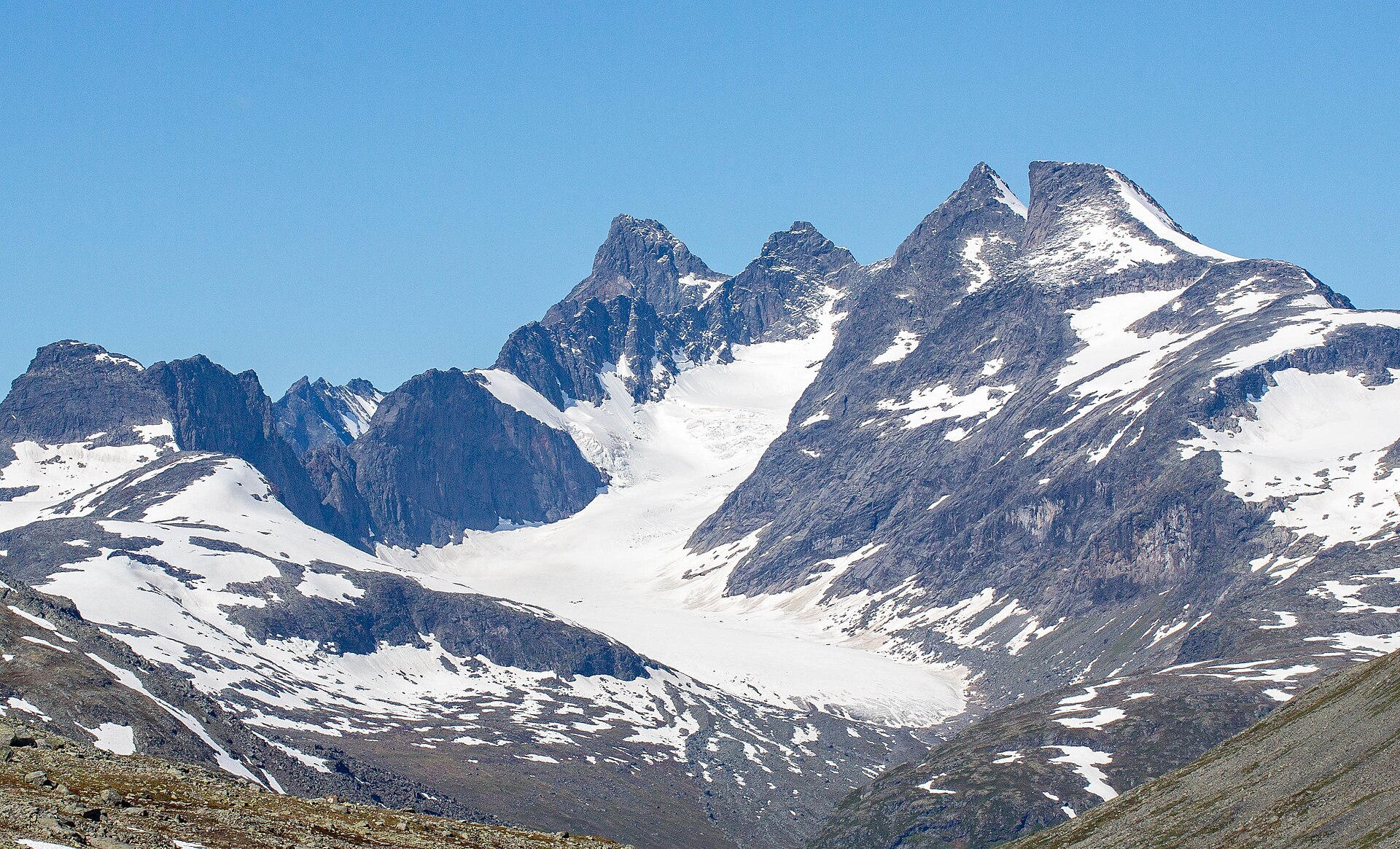
SummitClimbs Field Note: Hurrungane is the most alpine corner of Norway: a compact range in southwestern Jotunheimen with 23 summits over 2,000 metres, sharp ridges and small, steep glaciers. Many of its peaks can only be reached by climbing or glacier travel, including Store Skagastølstind (Storen, 2,405 m), Norway’s third-highest mountain. The base for almost everything here is Turtagrø, at 884 m on the Sognefjellsvegen road.
Norway’s Wildest Skyline
Hurrungane lies on the border between Luster and Årdal municipalities in Vestland, inside Jotunheimen National Park. It takes in the Skagastølstindane, Styggedalstindane, Dyrhaugstindane, Maradalstindane, Austanbottstindane and Soleibotntindane groups, among others. Its valleys run mostly north to south, with Skagastølsdalen, Ringsdalen, Gravdalen, Stølsmaradalen, Midtmaradalen and Maradalen the largest. Roughly, the range is bounded by Utladalen to the south and east, Helgedalen and Bergsdalen to the north, and Berdalsbandet to the west.
The name says a lot. Hurrungane comes from the verb hurra, to hurry or move fast with noise and roar, and means something like “the noisemakers”: the mountains are steep, and rockfall and avalanches are frequent on their slopes.
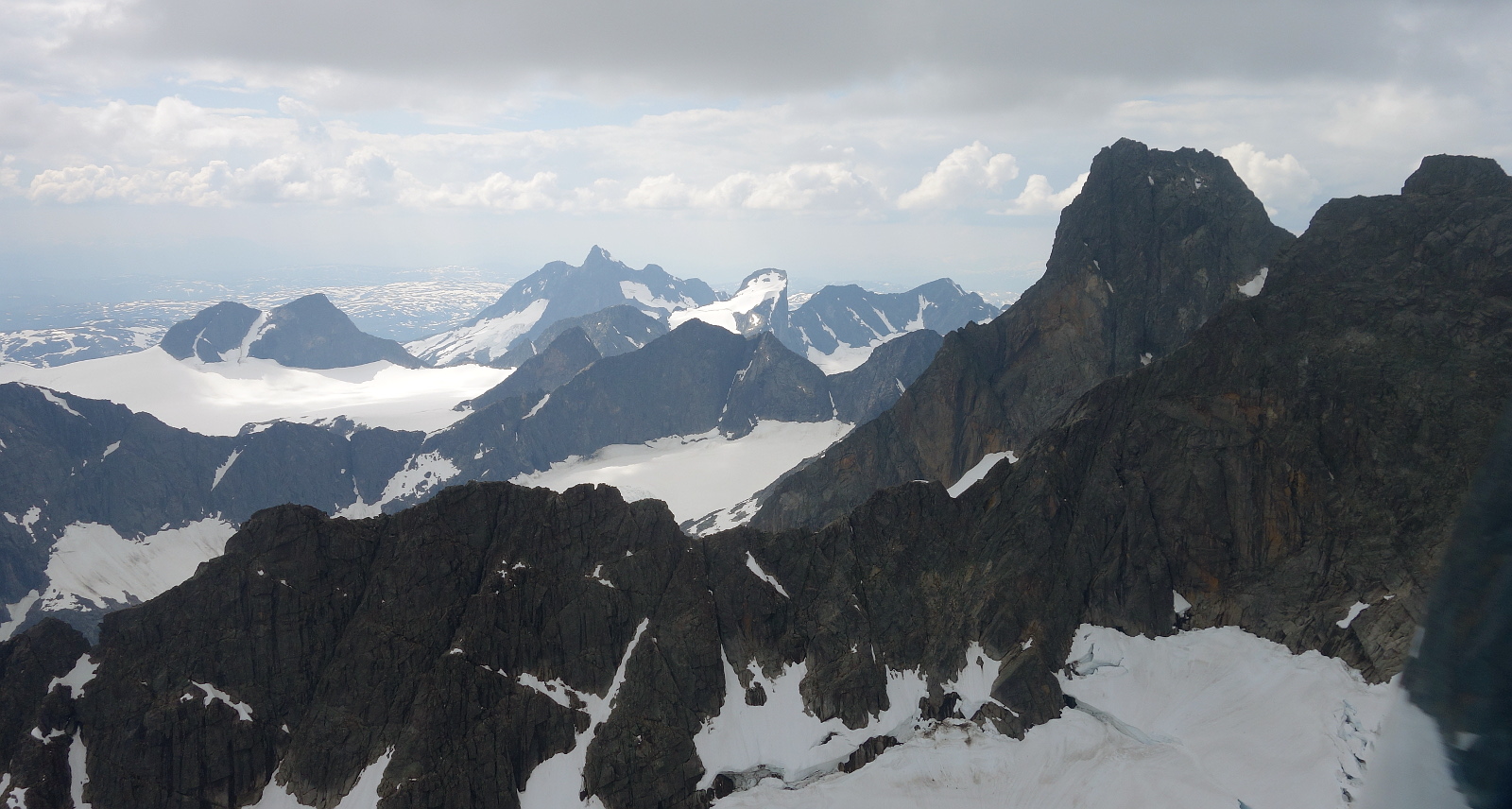
The Highest Peaks of Hurrungane
- Store Skagastølstind (Storen): 2,405 m
- Store Styggedalstind: 2,387 m
- Gjertvasstind: 2,351 m
- Sentraltind: 2,348 m
- Vetle Skagastølstind: 2,340 m
- Midtre Skagastølstind: 2,284 m
- Skagastølsnebbet: 2,222 m
- Store Austanbottstind: 2,202 m
Storen is the most famous of them, first climbed alone by William Cecil Slingsby in 1876. Read our full guide to Store Skagastølstind.
Glaciers Among the Peaks
A string of small alpine glaciers fills the high cirques. The largest are Gjertvassbreen, Styggedalsbreen, Skagastølsbreen, Ringsbreen, Berdalsbreen, Stølsmaradalsbreen, Midtmaradalsbreen, Slingsbybreen and Maradalsbreen, plus several smaller cirque glaciers. They are part of what makes so many summits here a matter for rope and glacier skills rather than a walk.
Turtagrø, Huts and Getting Around
The usual starting point is Turtagrø (884 m), on the Sognefjellsvegen road (Fv 55) north of the range. The Turtagrø hotel has a long tradition as the base for mountaineering and climbing in Norway. The Norwegian Trekking Association (DNT) has two huts in the area: Skagastølsbu, an emergency shelter at 1,758 m known as “the hut on Bandet”, and Stølsmaradalen at 845 m. An unmarked path runs from Turtagrø up Skagastølsdalen to Bandet, where Skagastølsbu stands.
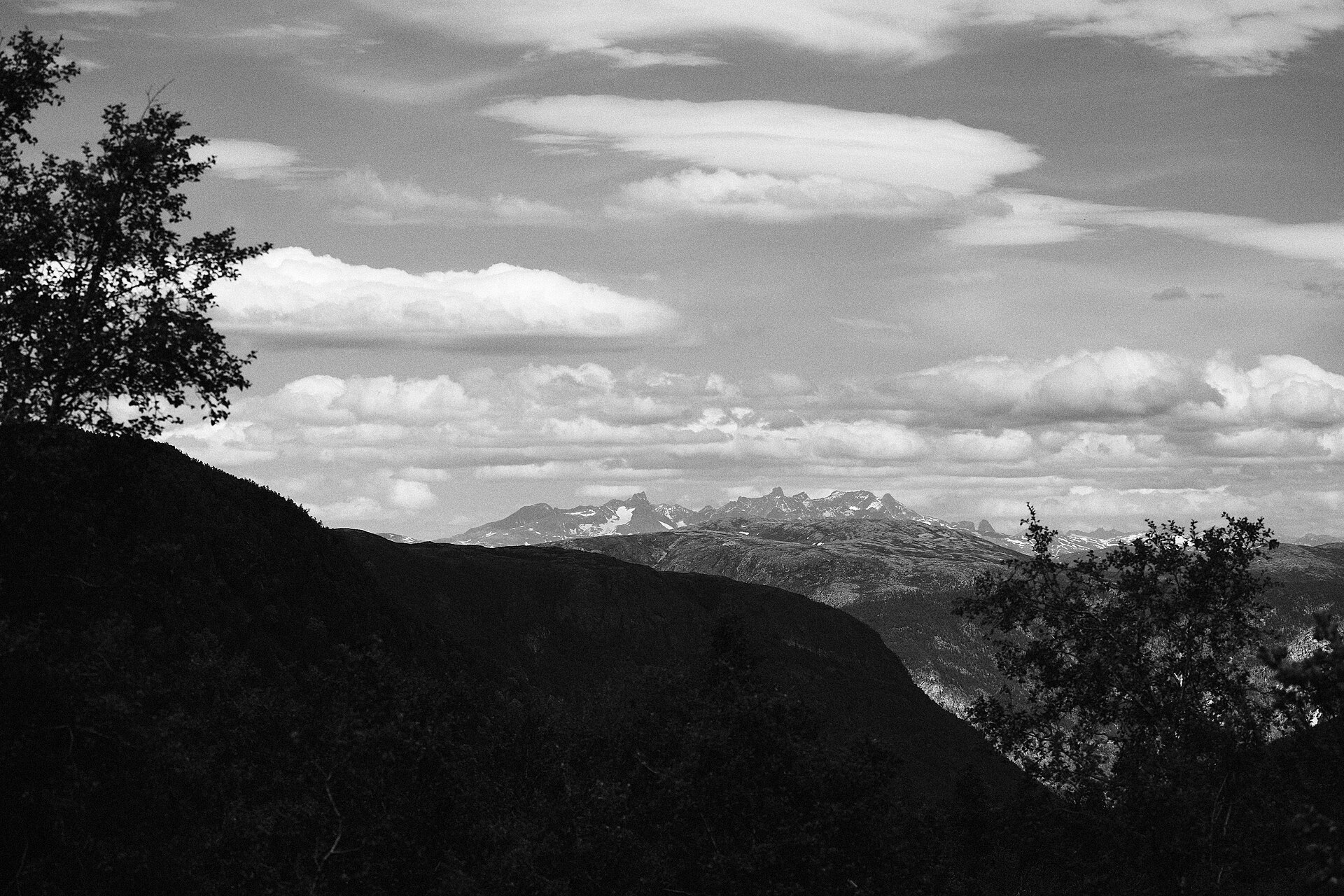
Not everything in Hurrungane needs a rope. Some summits have easier access, and just north of the range, across the road, Fannaråki gives hikers one of the best views of the whole Hurrungane skyline without any climbing.
A Range That Shaped Norwegian Art
Hurrungane was first described by the geologist Baltazar Mathias Keilhau. His sketches and watercolours were used as models by the painter Johannes Flintoe and are the earliest known pictures of the range. Flintoe’s Hurrungene, after a Keilhau sketch from a summit in Koldedalen, is among the oldest Norwegian book illustrations, and his painting Fra Jotunheimen, Hurrungene (1837) is on the cover of the National Museum’s book Oppdagelsen av fjellet (“the discovery of the mountains”).
The SummitClimbs Take
Hurrungane is where Norwegian hiking turns into mountaineering. If you climb, it is one of the best alpine playgrounds in Scandinavia; if you hike, base yourself at Turtagrø, walk up Skagastølsdalen towards Bandet in good weather, or climb Fannaråki for the view. Either way, respect the name: these are the noisemakers, with rockfall, steep ice and fast-changing weather.
Facts from Wikipedia (Hurrungane) and Norwegian Wikipedia. Always check current conditions before you go.