
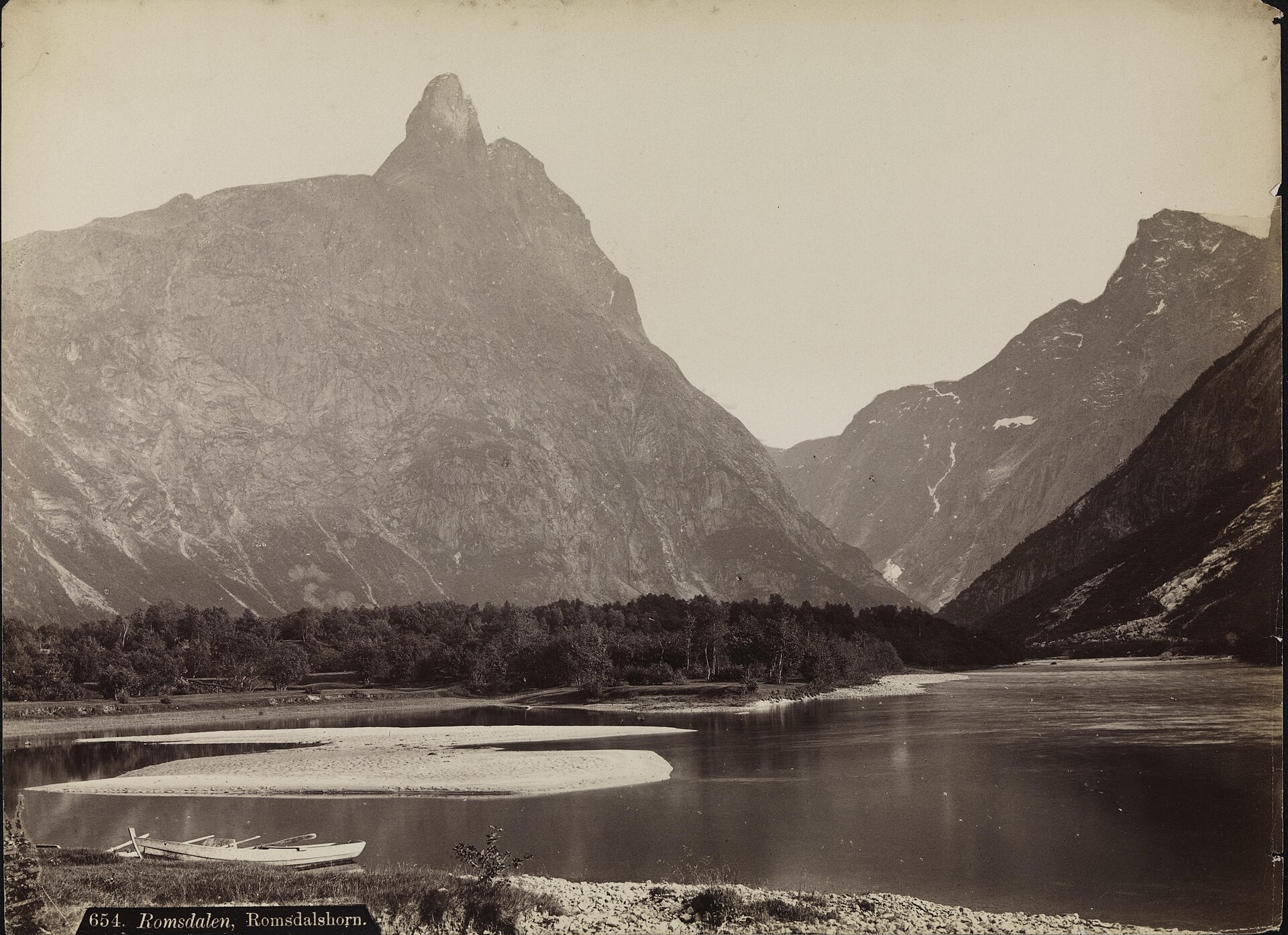
SummitClimbs Field Note: Romsdalshorn (Romsdalshornet, 1,550 m) is the great rock horn of Romsdalen, 10 km southeast of Åndalsnes in Rauma, Møre og Romsdal. It is a climbing mountain, not a hike: the summit is reached by rock climbing, best done in late summer, and the recommended way down is by abseil. Its history is one of the best stories in Norwegian mountaineering, including a secret first ascent that nobody believed for more than fifty years.
The Horn of Romsdalen
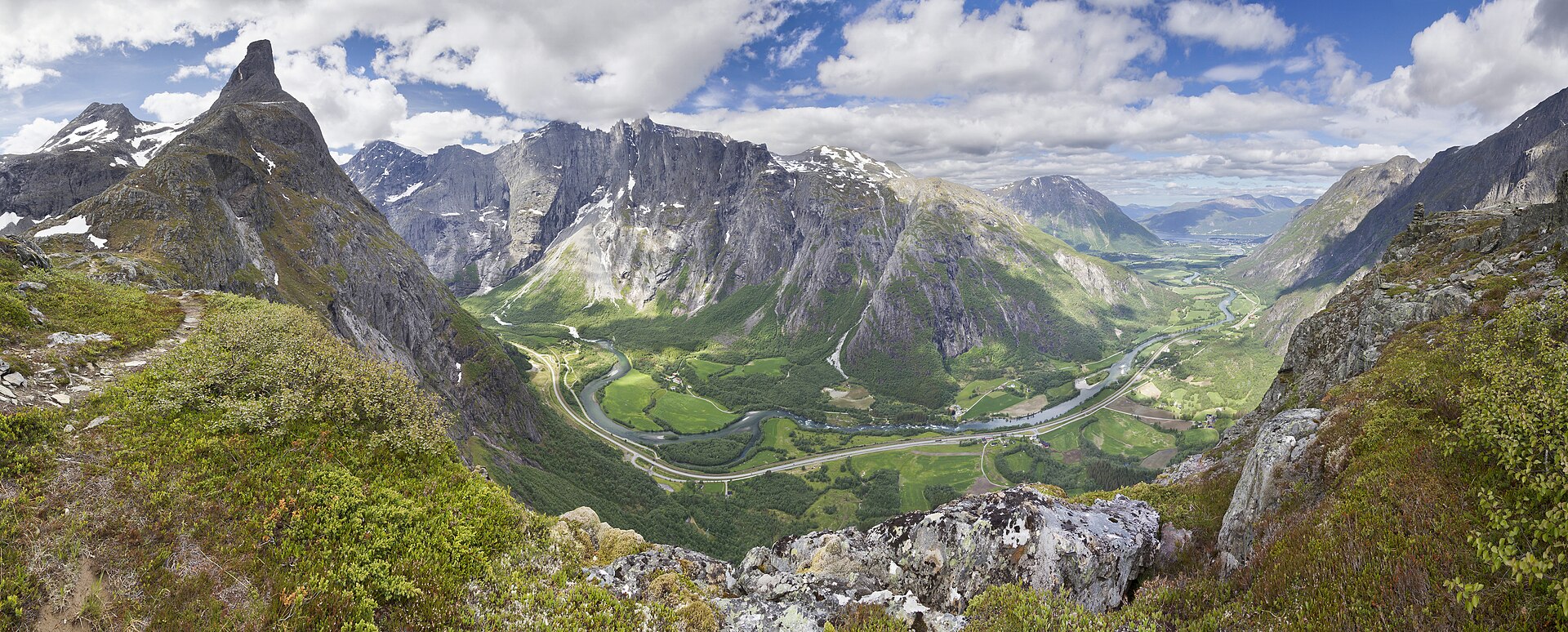
Romsdalshorn is one of the best-known peaks of the Romsdal Alps. It stands above the Rauma river in Romsdalen, where the Rauma railway and the E136 both pass below it. Store Venjetinden lies 3 km to the east, and 3 km to the west, across the valley, rises Store Trolltind, part of the Troll Wall ridge. The usual approach is from Romsdalen or, more commonly, from the top of Vengedalen. Inside the mountain, at its foot, is the Grytten hydropower station.
Romsdalshorn at a Glance
- Height: 1,550 m
- Location: Rauma Municipality, Møre og Romsdal; 10 km southeast of Åndalsnes
- Type: rock climb; no walking route to the summit
- Best season: late summer
- Descent: by abseil (recommended)
- Approach: from Romsdalen, or usually from the top of Vengedalen
- Classic route: the normal route via Halls renne, the most common line until the 1980s
The Ascent Nobody Believed
For years there were stories that the Horn had been climbed back in 1828 by Christen Smed from Gausdal (who took the name Kristian Hoel after moving to Romsdalen) and Hans Bjermeland from Vestnes. Nobody believed them. The writers Wilhelm Koren Christie (1847) and Aasmund Olavsson Vinje (1860) both wrote about the legend.
Then, on 1 September 1881, the Danish climber Carl Hall reached the summit with Erik Norahagen and Mathias Soggemoen, two crofters’ sons from Romsdalen. It was Hall’s seventh attempt; his six failures in 1880 and 1881 had been with the local mountaineer Jo Venjesbrekkå. On top they found a cairn “8 feet high and 4 feet wide”. Hoel and Bjermeland really had been there, more than fifty years earlier. The mountaineering historian Per Hohle later judged that the 1828 ascent was harder than anything climbed in the Alps at that time.
The summer of 1881 had been wet. When Hall arrived at Hotel Aak to try again, he found the English climber William Cecil Slingsby there on the same mission. The two met on 24 August; Slingsby had just climbed Store Venjetinden and left the next day for Jotunheimen, hoping for better weather. Hall waited, and when the weather cleared on 1 September his party made it. Their line became known as the normal route via Halls renne.
Guides, Solo Climbs and the King of the Horn
Two weeks after Hall, the veteran local guide Ole Endresen Kolflot climbed the Horn alone on 11 September 1881, the first solo ascent, after telling his family he was going to look for sheep in Venjesdalen. His son Henning Nygård, a DNT-certified guide, climbed it about 50 times and was on the first ascent of the north wall in 1920; Henning’s son Ole Nygård climbed it 121 times.
But the title belongs to Arne Randers Heen, “the King of Romsdalshorn”, who made the first winter ascent in 1930 and reached the summit 233 times. He built a stone hut on top, made a good stone chair and laid out a small flower bed.
The SummitClimbs Take
Romsdalshorn is a climber’s summit with a story to match: a secret 1828 ascent, a seven-time challenger and a man who stood on top 233 times. If you climb, it is a Romsdal classic for late summer, with an abseil descent. If you hike, Romsdalen has classic walks too: Romsdalseggen and Kongen are both in the same mountains above Åndalsnes.
Facts from Wikipedia (Romsdalshornet) and Norwegian Wikipedia. Climb with experience or a local guide, and check conditions before you go.
Keep the Trails Alive
Summit Climbs is free — no ads, no paywalls, no sponsored fluff.
Every guide is written from real experience to help your next adventure.
If it helped, a small support means the world and keeps the site running.