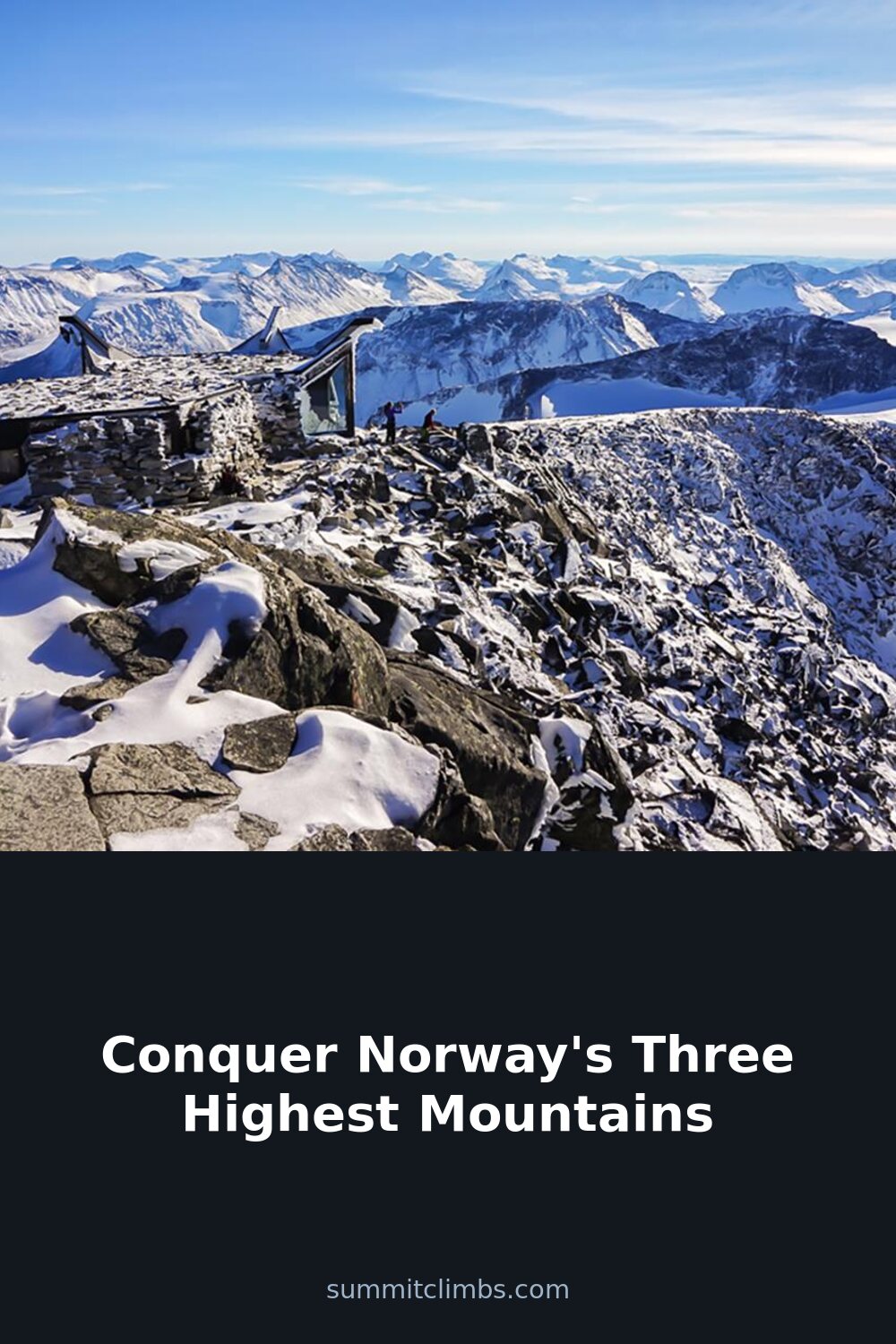
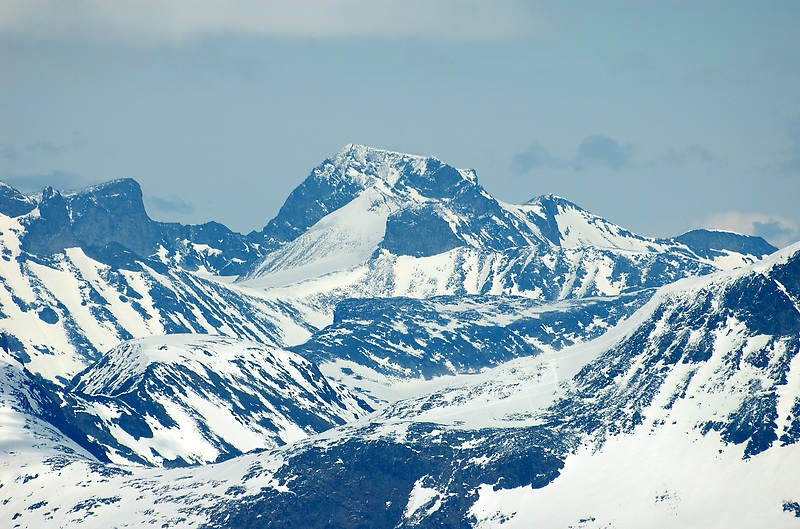
SummitClimbs Field Note: Norway’s three highest peaks—Galdhøpiggen, Glittertind, and Store Skagastølstind—form a classic high-altitude circuit for experienced hikers. This is not a weekend side trip. It’s a sequenced challenge that demands good weather windows, solid navigation, and glacier awareness. The reward is genuine: you move through three distinct alpine zones, each with its own character, and you earn some of the most continuous high-mountain exposure in Scandinavia.
Why This Place Belongs on a Norway Mountain Plan
If you’re building a Norway itinerary around summit objectives, these three are the logical spine. Galdhøpiggen (2,469 m) is the country’s highest point and the obvious starting point—well-trodden, with multiple approach options and a hut network that makes it accessible for a fit hiker. Glittertind (2,465 m) sits just a few meters lower but is a distinct mountain with a longer, more committing ridge. Store Skagastølstind (2,405 m) is the technical outlier: it requires scrambling and route-finding skills that the other two do not. Together, they give you a complete picture of Norwegian alpine terrain: from straightforward trail hiking to exposed rock and glacier travel.
This is not a trip for beginners. But for anyone with solid summer mountaineering experience, it’s a clean, logical progression. You’ll move through Jotunheimen National Park and the Hurrungane range, spending multiple days above treeline. The landscape is raw—granite, ice, and tarns—and the light at these latitudes can shift from brilliant to oppressive within an hour.
The SummitClimbs Snapshot
- Peaks: Galdhøpiggen (2,469 m), Glittertind (2,465 m), Store Skagastølstind (2,405 m)
- Region: Jotunheimen National Park (Galdhøpiggen, Glittertind) and Hurrungane range (Store Skagastølstind)
- Best season: Late June to mid-September. Snow conditions and hut availability dictate the exact window.
- Technical difficulty: Galdhøpiggen is a strenuous hike; Glittertind requires glacier crossing skills; Store Skagastølstind involves scrambling up to UIAA II.
- Recommended experience: Comfortable with 8–10 hour days on steep, rocky terrain. Glacier travel experience essential for Glittertind and the approach to Skagastølstind.
- Key hazards: Rapid weather changes, crevassed glaciers, loose rock on Skagastølstind, and navigation in whiteout conditions.
Route Reality and Local Conditions
Galdhøpiggen – The High Point
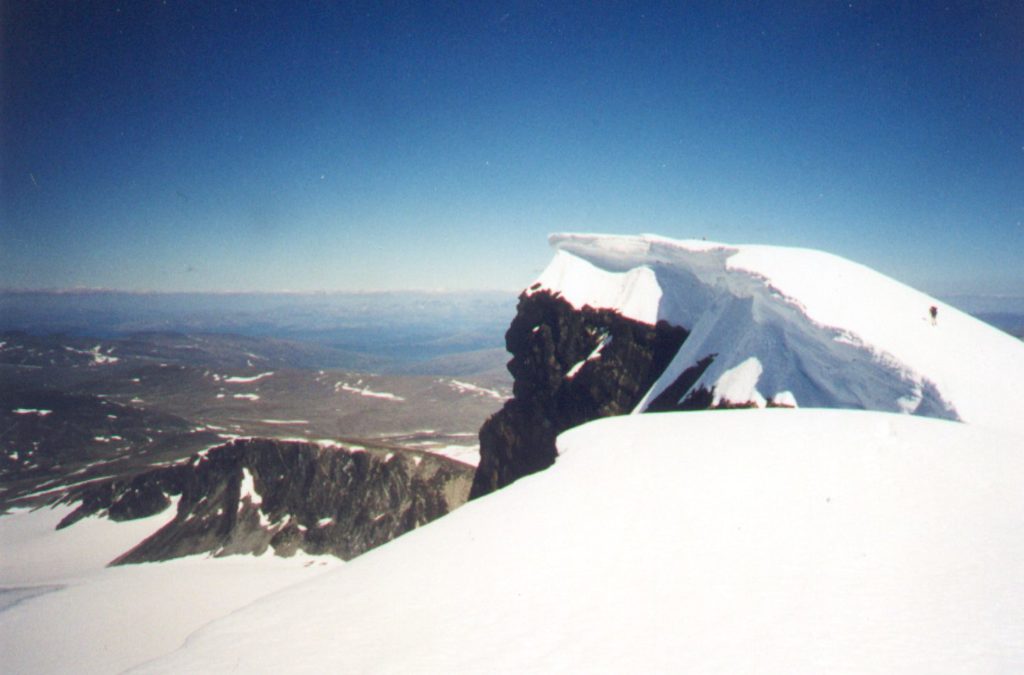
The most popular route starts from the Juvasshytta hut, which sits at 1,840 m and is accessible by road in summer. From there, it’s a 4–5 hour ascent on a well-marked trail that crosses the Styggebreen glacier. This is a guided-required section for most parties because of the crevassed ice. The final push is a straightforward snow slope and then a rocky summit ridge. On a clear day, the view stretches to the Jotunheimen massif and beyond. The summit is busy—expect company—but the approach is efficient and the hut infrastructure is excellent.
Glittertind – The Second Peak
Glittertind is often climbed from the Glitterheim hut, which sits at 1,384 m. The standard route follows the east ridge, which involves a long glacier traverse. The glacier is heavily crevassed in places, and the route requires careful navigation even in good visibility. The summit ridge is broad and snow-covered, and the descent can be tedious in soft snow later in the day. This is a longer day than Galdhøpiggen—plan for 8–10 hours round trip from the hut. The summit is less crowded, and the perspective back toward Galdhøpiggen is striking.
Store Skagastølstind – The Technical Prize
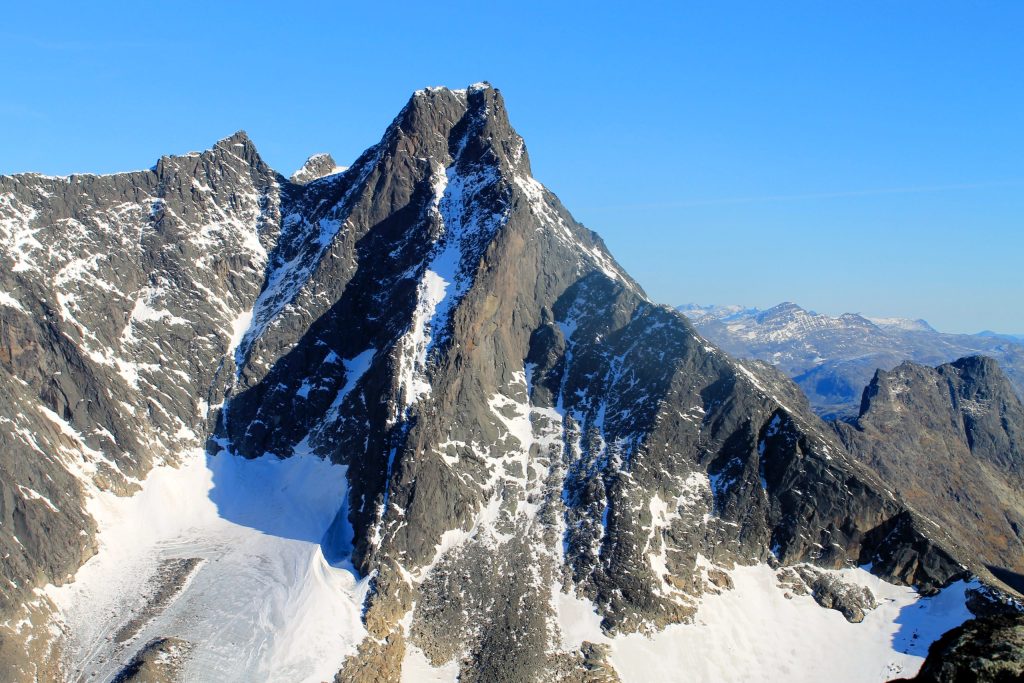
This is the one that separates the hikers from the mountaineers. The standard route, Heftyes renne, is a couloir climb that reaches UIAA II difficulty. It requires a rope, helmet, and crampons, and the exposure is real. The approach from the Turtagrø area involves a long walk-in and a bivouac or hut stay at Skagastølsbu. The summit is a sharp, airy point with a narrow ridge. This is not a peak to attempt without prior alpine rock experience. The reward is solitude and a sense of accomplishment that the other two peaks can’t match.
What to Watch For
- Weather: The Jotunheimen weather can collapse in minutes. A clear morning can turn into a whiteout by midday. Always check the mountain forecast at yr.no and be prepared to turn around. The highest peaks are lightning magnets—get off the summit before afternoon thunderstorms.
- Glacier safety: Galdhøpiggen and Glittertind both require glacier travel. Use a rope, carry crevasse rescue gear, and travel with someone who knows how to use it. Guided trips are available and recommended if you’re not confident.
- Navigation: The trails on Galdhøpiggen are well-marked, but the routes on Glittertind and Skagastølstind are not. Carry a map, compass, and GPS device with downloaded tracks. In fog, it’s easy to wander onto a glacier tongue or into a dead-end gully.
- Timing: Start early. The snow bridges on glaciers are firmer in the morning, and the afternoon heat can loosen rocks on Skagastølstind. Aim to be off the summit by early afternoon.
- Permits and huts: No permits are required for these peaks, but hut bookings are essential in peak season. The Norwegian Trekking Association (DNT) operates most of the huts—book ahead, especially for Juvasshytta and Glitterheim.
The SummitClimbs Take
This trio is one of the best alpine objectives in Scandinavia, but it’s not a checklist. Each peak demands respect, and the sequence works best when you treat it as a progression: start with Galdhøpiggen to build confidence, move to Glittertind to refine your glacier skills, and finish with Store Skagastølstind for the technical challenge. If you skip steps or rush the weather, you’ll miss the point.
What makes these peaks stand out is not just the height—it’s the exposure. You are above treeline for days, moving through a landscape that feels genuinely arctic. The huts are comfortable, the approach roads are straightforward, and the infrastructure is excellent. But the mountains themselves are unforgiving. Go with a partner who has solid alpine judgment, pack for four-season conditions in summer, and be ready to bail if the weather turns. If you do that, you’ll come away with a real sense of what Norwegian high-altitude travel is about.
For a detailed route breakdown, gear list, and hut booking tips, check the SummitClimbs Norway section. We’ve covered the approaches, the crux sections, and the bail-out options for each peak. This is a trip worth planning carefully—and worth doing right.
Keep the Trails Alive
Summit Climbs is free — no ads, no paywalls, no sponsored fluff.
Every guide is written from real experience to help your next adventure.
If it helped, a small support means the world and keeps the site running.