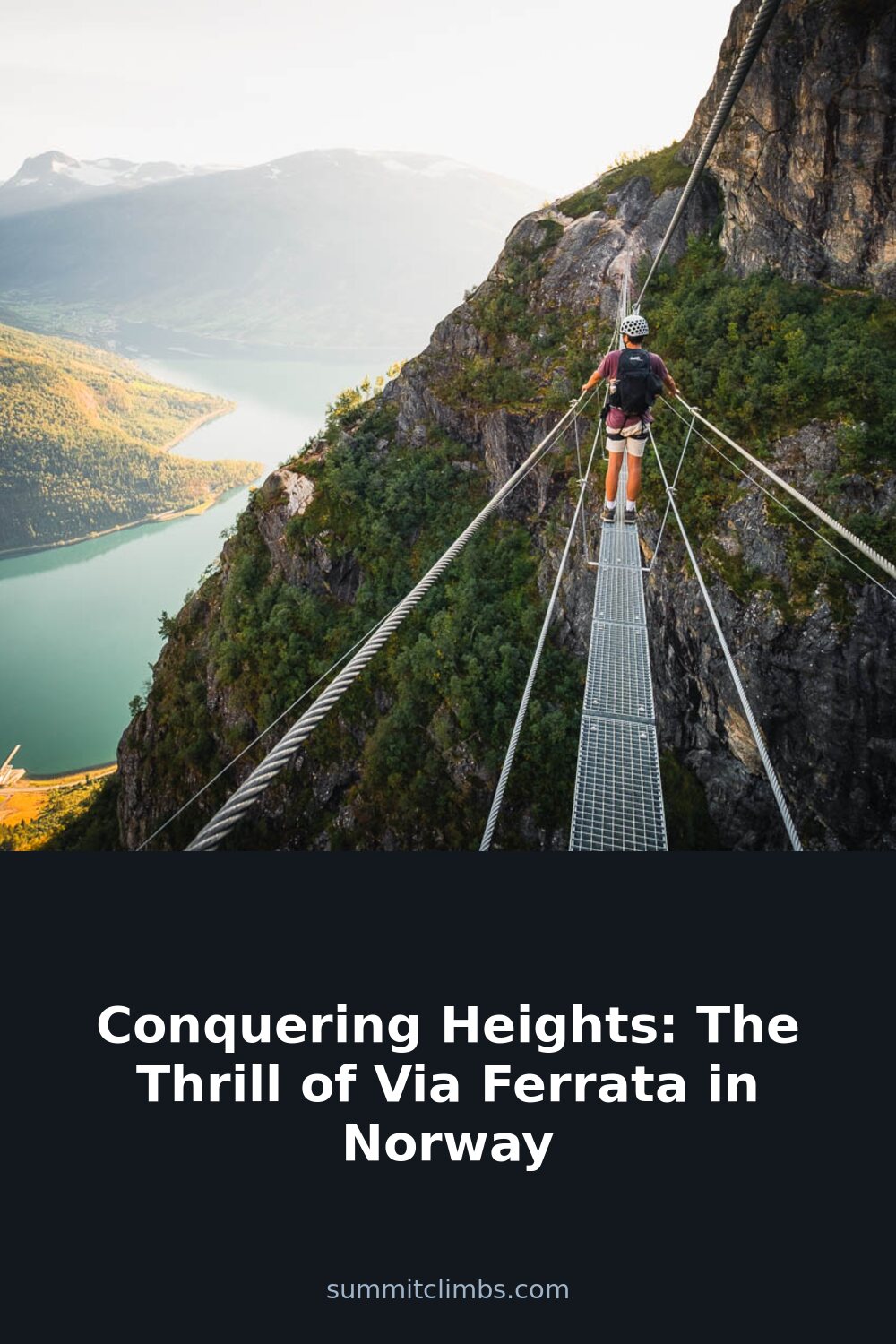
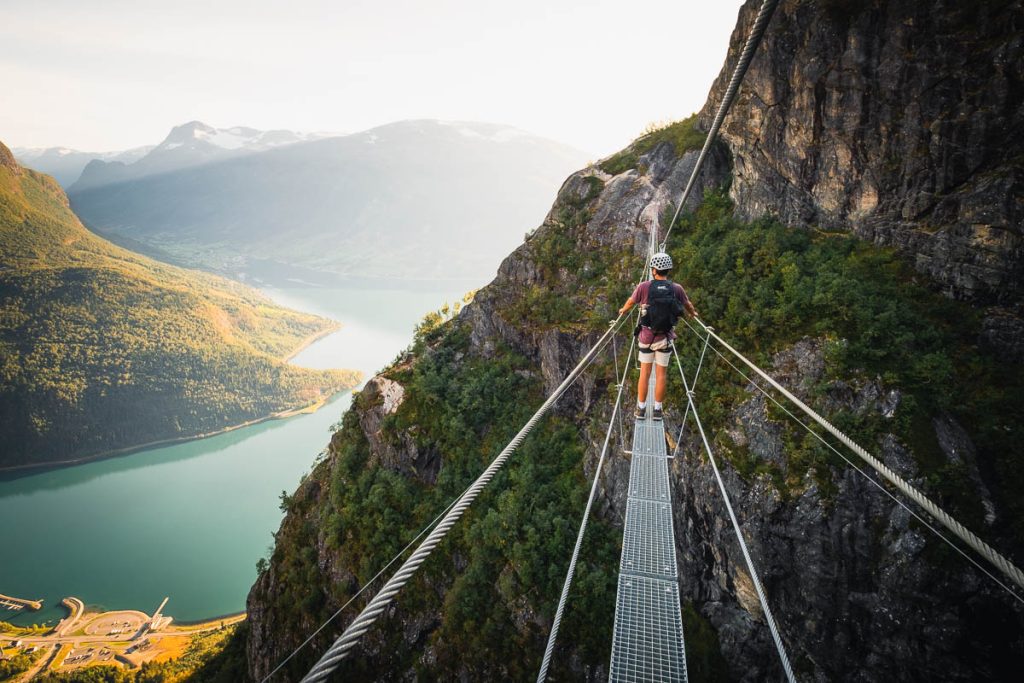
SummitClimbs Field Note: Norway’s via ferrata routes deliver a rare blend: exposed climbing on fixed iron cables, ladders, and anchors, set against landscapes that shift from deep fjord to alpine ridge. These are not walk-ups. They demand focus, a head for heights, and respect for the weather. But for those who prepare, they offer a direct line into terrain that would otherwise require full rock-climbing skills. We’ve field-checked the key routes, talked to local guides, and sorted what matters for your planning.
Why This Place Belongs on a Norway Mountain Plan
Norway’s via ferrata scene sits apart from the Alps. The routes here thread through raw, glacially carved country where the scale is immediate. You climb beside waterfalls, traverse cliffs that drop straight into fjords, and top out on summits with views that stretch to the horizon. The infrastructure is modern, the guiding culture strong, and the access often more straightforward than in the Dolomites or the Mont Blanc massif. For a climber who wants to push into exposed terrain without months of technical training, this is a sound investment.
The routes suit a specific window: late June through early September, when snow has cleared and the cables are dry. Outside that, conditions turn quickly—ice, high winds, and short daylight make for a different game entirely. Plan accordingly.
The SummitClimbs Snapshot
Best for: Fit hikers and climbers comfortable with exposure. Beginners can join with a guide, but you need steady nerves and solid fitness—some routes climb 600–900 vertical meters on cable and ladder sections.
Key routes: Loen Via Ferrata (Mount Hoven, 1,011 m), Trolltunga Via Ferrata (the iconic rock ledge), and Romsdalseggen Ridge (a hybrid hike-and-climb with fixed cables).
Season: Mid-June to mid-September. Check local conditions before departure—snow can linger on upper sections into July.
Access: Most routes start near towns with lodging and gear rental. Loen is 5 hours from Bergen by car; Trolltunga is near Odda, 3 hours from Bergen. Public transport exists but schedules are sparse—renting a car gives flexibility.
Gear needed: Helmet, harness, via ferrata lanyard with energy absorber, sturdy approach shoes or light boots, gloves, and a small pack for layers and water. Guides provide the technical kit if you book a trip.
Route Reality and Local Conditions
Loen Via Ferrata
This is Norway’s most famous via ferrata, and for good reason. The route climbs the south face of Mount Hoven, starting from the Loen Skylift top station at 755 m. The climbing is sustained: vertical ladders, exposed traverses, and a final cable section to the summit at 1,011 m. The exposure is real—you’re looking straight down into Nordfjord much of the way. The reward is a 360-degree panorama of the fjord, the Jostedalsbreen glacier, and the surrounding peaks.
Time: 3–5 hours round trip from the top station. Add time for the skylift ride (5 minutes) and any waiting.
Difficulty: Moderate to challenging. The vertical ladders demand upper-body strength and a calm head. Beginners should hire a guide—several outfitters operate from Loen.
Weather: The face catches afternoon sun, but wind can pick up suddenly. Rain makes the rock and ladders slick; fog kills the views. Start early, check the forecast, and turn back if conditions shift.
Trolltunga Via Ferrata
This route approaches the famous Trolltunga rock ledge from a different angle than the standard hike. The via ferrata climbs the cliff below the ledge, using cables and ladders to reach the top of the formation. It’s a shorter, more technical option for those who want to earn the view with hands-on climbing. The standard hiking trail is 20–28 km round trip; the via ferrata cuts distance but adds exposure.
Time: 4–6 hours for the via ferrata route, depending on group pace and conditions.
Difficulty: Challenging. The climbing is steep, with several overhanging sections on ladders. Exposure is constant—you’re above Lake Ringedalsvatnet, 700 m below. This is not a beginner route without a guide.
Access: The start is near the P2 parking area at Tyssedal. Book parking in advance—spaces fill quickly in summer. Guided trips are the norm; few attempt this route solo.
Romsdalseggen Ridge
Strictly speaking, this is a via ferrata–hike hybrid. The ridge traverse between Vengedalen and Romsdalen includes fixed cables on the steepest sections, but it’s more about scrambling and route-finding than pure vertical climbing. The views of the Romsdalsfjord and the Trollveggen cliff face are among Norway’s best.
Time: 6–8 hours for the full traverse.
Difficulty: Moderate. The cables are on exposed sections, but the route is mostly walking on a narrow ridge. Fitness and a head for heights are key.
Access: Start at the Vengedalen parking area (near Åndalsnes) and end at the Romsdalen gondola. Shuttle buses run in summer.
What to Watch For
- Weather is the real decision-maker. Norway’s mountain weather changes fast. A clear morning can turn to rain and wind by noon. Check yr.no or the local guide service before you start. If the forecast shows rain or gusts above 30 km/h, postpone.
- Gear matters more than fitness. A proper via ferrata lanyard with an energy absorber is non-negotiable. Do not use a climbing daisy chain or sling—these lack the dynamic absorption needed in a fall. Rent from a local outfitter if you don’t own the kit.
- Guides are worth the cost. For first-timers or anyone unfamiliar with Norwegian rock, a guide brings route knowledge, safety oversight, and local weather reading. Several companies in Loen, Odda, and Åndalsnes offer half- and full-day trips. Book ahead in peak season.
- Start early, finish early. Afternoon thunderstorms are common in July and August. Aim to be off the route by 2 p.m. This also avoids the worst of the crowds on popular sections.
- Respect the exposure. Via ferrata is not hiking. A fall on a cable section can be serious, even with a lanyard. Stay focused, clip and unclip deliberately, and keep three points of contact on ladders.
- Pack for the summit. Even on a warm day, wind at 1,000 m can chill quickly. Bring a shell jacket, a warm mid-layer, gloves, and extra water. There is no water source on the routes.
The SummitClimbs Take
Norway’s via ferrata routes are not just a tick on a list. They are a way to move through some of the most dramatic terrain in Europe with your own hands and feet. The climbing is honest—exposed, physical, and rewarding. The views are not earned passively; you work for them, and that makes them stick.
For the fit hiker ready to step onto cable, Loen is the best introduction. For the experienced climber wanting a full day of exposure, Trolltunga delivers. And for anyone who loves a ridge walk with a bite, Romsdalseggen is a classic. Go with a guide if you’re new. Go with a good weather window and solid gear. And go with the understanding that the mountain sets the terms.
SummitClimbs has field-tested these routes and will continue to update conditions each season. If you’re planning a Norway mountain trip, start here, then build your own plan around what the ground tells you.
Keep the Trails Alive
Summit Climbs is free — no ads, no paywalls, no sponsored fluff.
Every guide is written from real experience to help your next adventure.
If it helped, a small support means the world and keeps the site running.