SummitClimbs Field Note: Besseggen Ridge is one of Norway’s most celebrated day hikes, and for good reason: it delivers a compact, high-contrast mountain traverse that few other routes can match. But this is not a casual stroll. It’s a steep, exposed, and weather-dependent ridge walk that demands respect, proper gear, and honest self-assessment. We’ve walked it in clear skies and in wind that pinned us to the rock. Here’s what you need to know before you go.
Why This Place Belongs on a Norway Mountain Plan
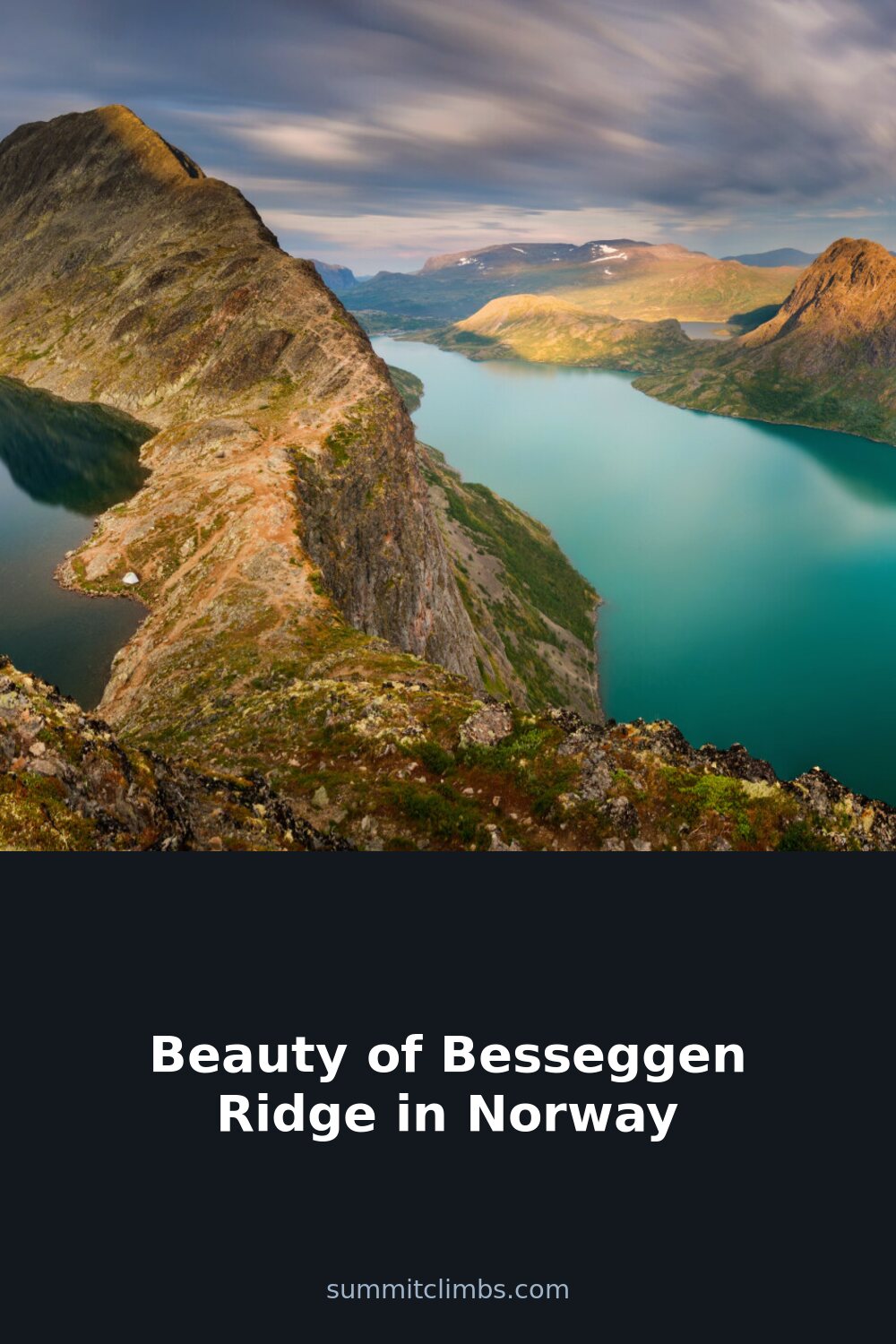
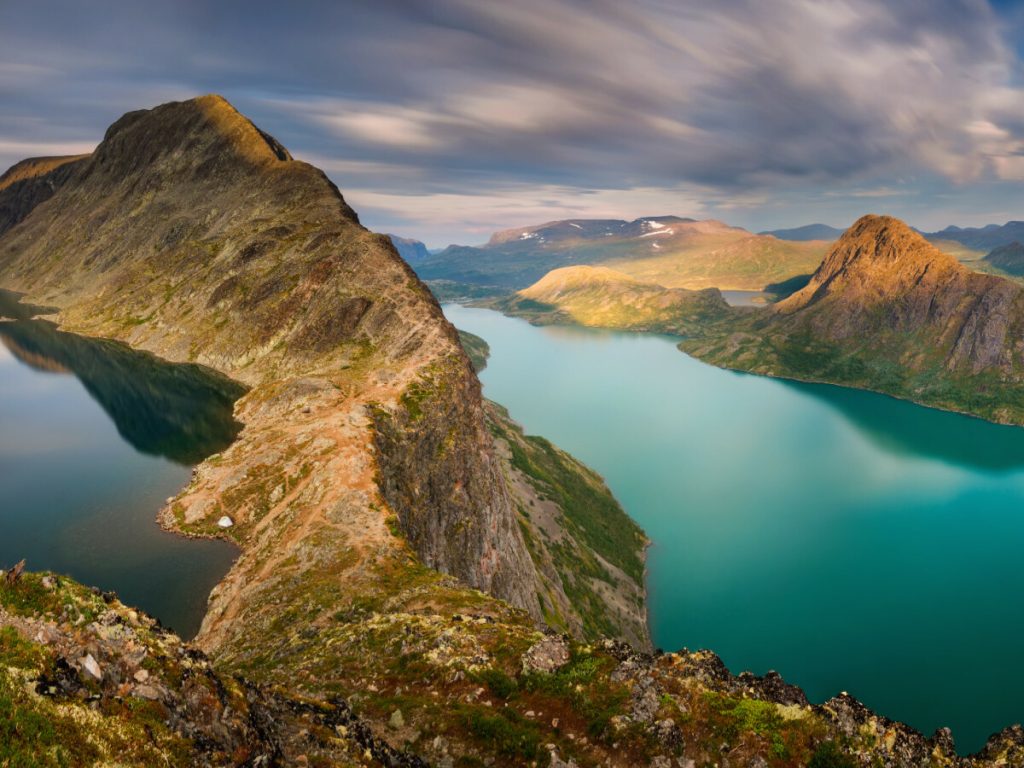
Besseggen sits inside Jotunheimen National Park, a region that holds the highest peaks in Northern Europe. The ridge itself is a sharp, rocky crest that separates two dramatically different lakes: the deep, clear blue of Gjende and the milky emerald-green of Bessvatnet. That color contrast alone makes the traverse one of the most photographed in Scandinavia. But the real draw is the quality of the walking—narrow, rugged, and continuously engaging. You’re not just hiking to a viewpoint; the entire ridge is the view.
This is a route that suits experienced hikers who are comfortable with exposure and want a full-day challenge without committing to a multi-day expedition. It also works for fit beginners who are prepared for steep sections and variable conditions, provided they go with a guide or a knowledgeable partner. If you’re looking for a gentle nature walk, this is not it. If you want a genuine mountain day that tests your legs and your nerve, Besseggen delivers.
The SummitClimbs Snapshot
- Location: Jotunheimen National Park, central Norway. Access from the mountain lodge at Gjendesheim on the eastern shore of Lake Gjende.
- Route type: Point-to-point ridge traverse. Most hikers start at Gjendesheim, cross the ridge, and descend to Memurubu, then take a ferry back across Gjende. You can also reverse the direction.
- Distance and time: The full traverse is about 14 kilometers. Most parties take 6 to 8 hours, depending on pace, weather, and how often you stop to take in the views. Plan for a full day.
- Difficulty: Strenuous. There are steep ascents and descents, loose rock, and sections where the ridge narrows to just a few meters with significant drops on both sides. Not technical, but exposed.
- Best season: Mid-July through early September, when snow has cleared and the trail is dry. Outside this window, conditions can be hazardous.
- Access: From Oslo, drive or take a bus to Gjendesheim. The ferry from Memurubu back to Gjendesheim runs regularly in season—check the current schedule before you start.
Route Reality and Local Conditions
The classic approach starts at Gjendesheim, where the trail immediately begins climbing. The first section is a steady, steep grind up the slope toward the ridge. You’ll gain about 500 meters of elevation in the first hour. The path is well-defined but rocky, and loose stones demand careful footing. Once you reach the ridgeline, the terrain opens up. The walking becomes more varied—scrambling over boulders, crossing slabs, and traversing narrow sections where the trail is barely a meter wide.
The most exposed part is the central section of the ridge. Here, the drop to Gjende on your left is nearly vertical in places, and the slope to Bessvatnet on your right is steep and unrelenting. The path is usually stable, but in wet conditions it can be slippery. Wind is the real wildcard. Gusts can be strong enough to knock you off balance, especially on the exposed crest. If the forecast calls for high winds, reconsider your plan.
After the ridge, the trail descends steeply toward Memurubu. This descent is harder on the knees than the ascent, and the loose gravel requires careful foot placement. The final stretch winds through birch forest before reaching the lake. From Memurubu, the ferry back to Gjendesheim takes about 20 minutes. Check the timetable before you start—the last ferry often leaves by late afternoon, and missing it means a long walk around the lake.
Weather in Jotunheimen changes fast. A clear morning can turn into rain, wind, and low cloud by midday. Start early—before 8 a.m. if possible—to give yourself a buffer. The trail is marked with red T’s painted on rocks, but in fog, visibility drops to a few meters. A map, compass, and GPS backup are essential. Do not rely solely on your phone; reception is patchy at best.
What to Watch For
- Footing on loose rock: The trail is covered in scree and unstable stones. Sturdy, ankle-supporting boots are non-negotiable. Trail runners are not enough here.
- Exposure and vertigo: The narrow ridge sections are not technical, but they are intimidating. If you have a fear of heights, this route will challenge you. Consider hiking in the opposite direction (Memurubu to Gjendesheim) if you want the most exposed sections early in the day when you’re fresher.
- Ferry timing: The boat from Memurubu is your ride back. Miss it, and you’re looking at an additional 10-kilometer walk along the lake shore on an unmarked trail. Plan your pace to arrive at Memurubu with at least 30 minutes to spare.
- Water sources: There are a few small streams along the ridge, but they can dry up late in the season. Carry at least two liters of water. A filter or purification tablets are useful if you plan to refill.
- Crowds: Besseggen is popular. In July and August, you’ll share the trail with dozens of other hikers. Start early to avoid the peak midday crush and to have the ridge more to yourself.
- Leave No Trace: This is a fragile alpine environment. Pack out everything you bring, including food scraps and toilet paper. Stay on the trail to prevent erosion. The park is a protected area, and the rules are enforced.
The SummitClimbs Take
Besseggen Ridge is a classic for a reason. The contrast between the two lakes, the sharp ridge line, and the sense of walking on top of the world make it one of the most memorable day hikes in Norway. But it’s not a walk in the park. The exposure is real, the weather is fickle, and the terrain demands constant attention. This is a route for hikers who are prepared, fit, and willing to turn back if conditions deteriorate.
If you go, go with respect for the mountain. Check the forecast, carry the right gear, and start early. The reward is a day of pure alpine immersion—narrow ridges, cold wind, and views that stretch across Jotunheimen’s jagged horizon. Besseggen will test you, but if you’re ready, it will also give you one of the finest ridge walks in Europe.
Keep the Trails Alive
Summit Climbs is free — no ads, no paywalls, no sponsored fluff.
Every guide is written from real experience to help your next adventure.
If it helped, a small support means the world and keeps the site running.