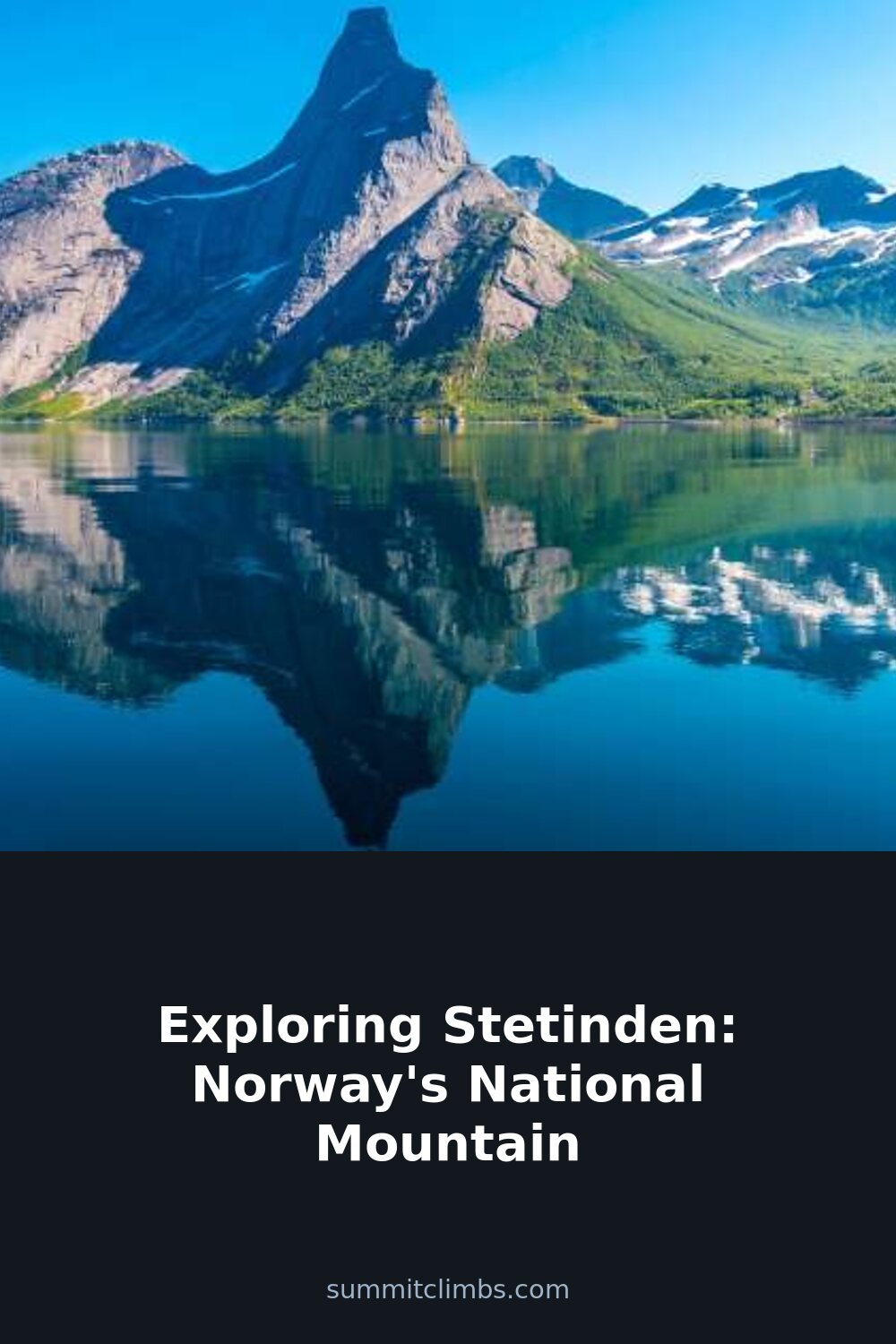
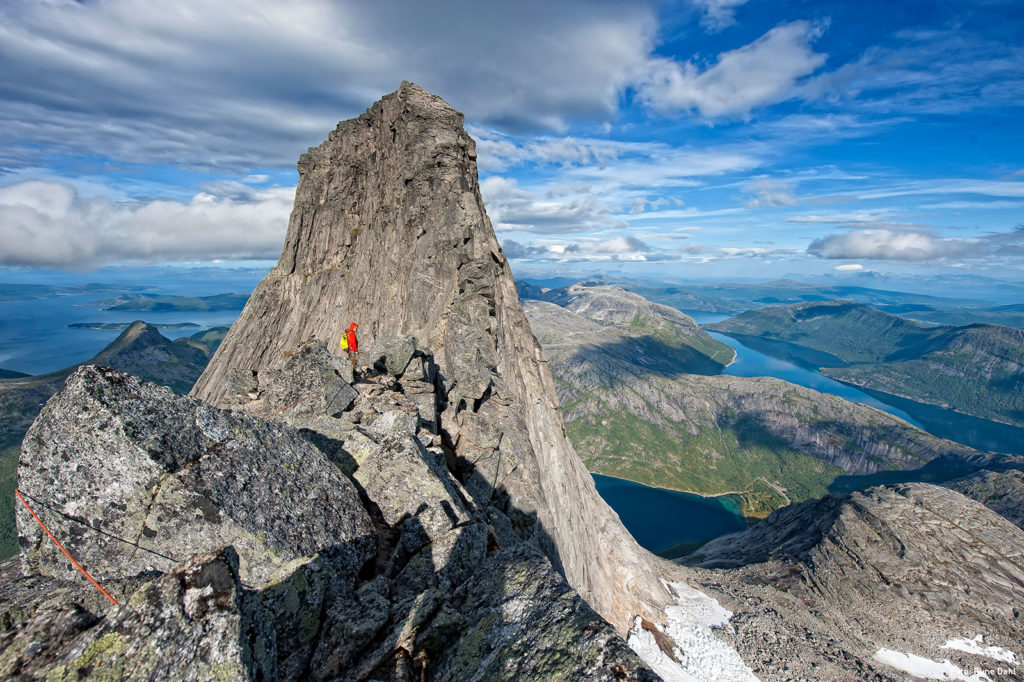
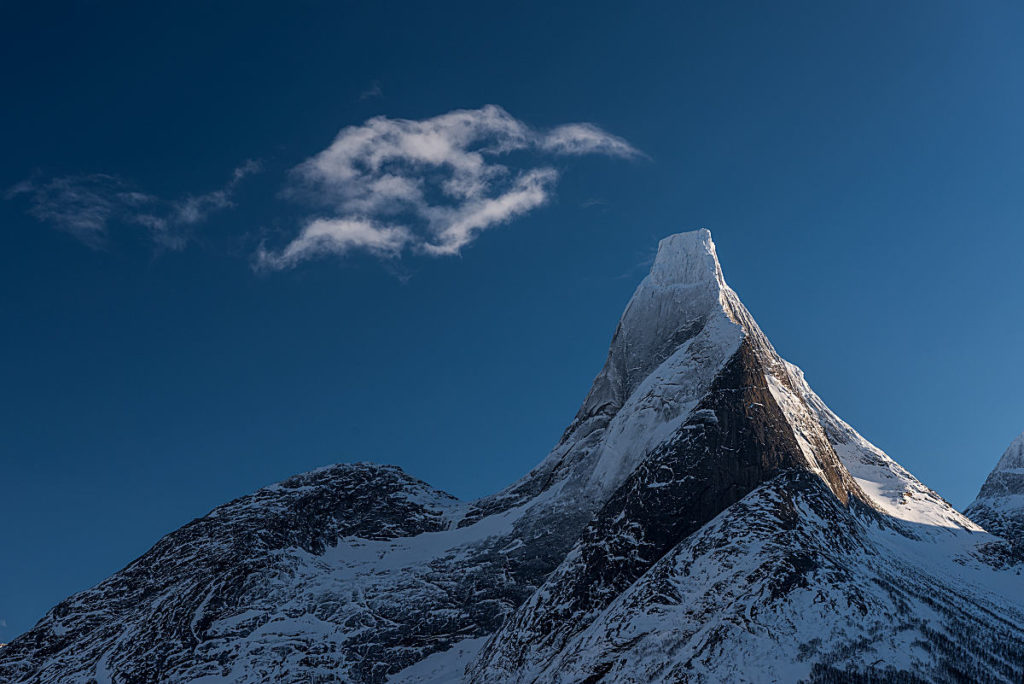
SummitClimbs Field Note: Stetind (also Stetinden, or Stáddá in Lule Sami) is a 1,392 m (4,567 ft) granite obelisk rising straight out of the fjord landscape about 15 km northeast of Kjøpsvik, in Narvik Municipality, Nordland. In 2002 NRK listeners voted it Norway’s national mountain. It is not a hike: even its easiest route is a climb on the east wall, and the hardest move on the first-ascent line is a famous finger traverse. Stetind is for roped climbers with solid experience, good conditions and a long day in hand.
Why Stetind Belongs on a Norway Mountain Plan
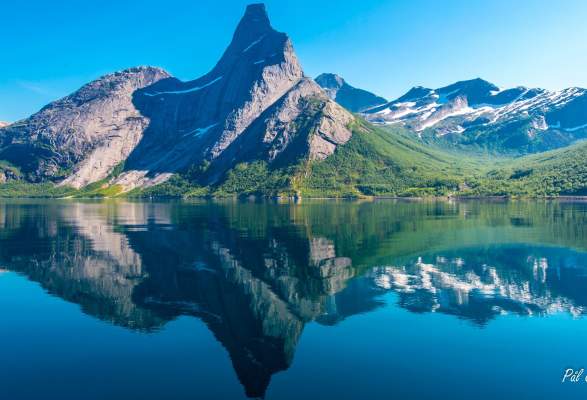
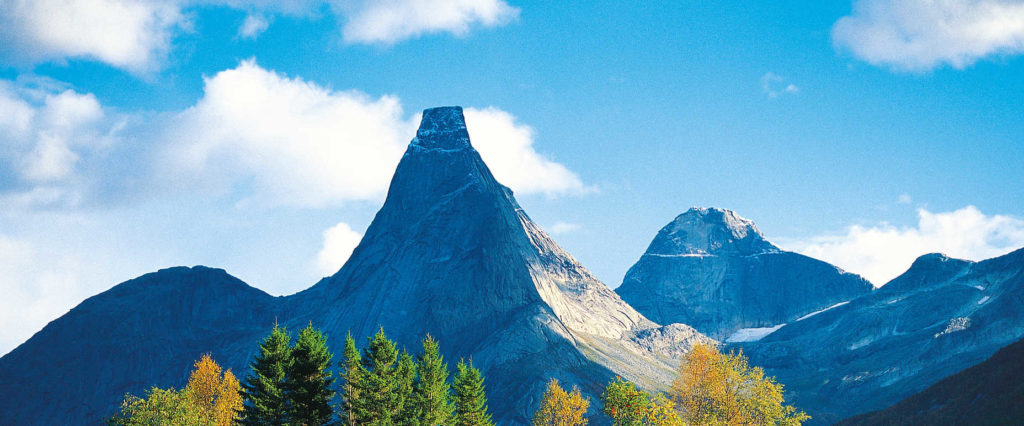
Stetind’s shape is unmistakable: a smooth, near-symmetrical spire of granite that looks carved rather than weathered. It is not among Norway’s highest mountains, but few summits carry as much weight in Norwegian climbing history or national identity. For climbers heading north of the Arctic Circle, it is one of the great Nordic objectives, and it sits within reach of the Lofoten climbing classics.
The SummitClimbs Snapshot
- Height: 1,392 m (4,567 ft)
- Location: Narvik Municipality (formerly Tysfjord), Nordland, about 15 km northeast of Kjøpsvik
- Names: Stetind, Stetinden; Stáddá in Lule Sami
- Status: Voted Norway’s national mountain by NRK listeners in 2002
- First ascent: 30 July 1910, Ferdinand Schjelderup, Carl Wilhelm Rubenson and Alf Bonnevie Bryn
- Easiest route: a climb on the east wall; there is no walking route to the top
- Famous crux: Mysosten, a smooth crag on the 1910 line
- Who it suits: experienced trad climbers comfortable on exposed granite
The Climbing History
Twenty years of failures
Stetind repelled some of the best mountaineers of the era. Paul Güssfeldt and Martin Ekroll tried in 1888. In 1889 Carl Hall and Mathias Soggemoen reached the lower summit, where Hall built a cairn; that point is still called Halls fortopp. William Cecil Slingsby, the first man up Store Skagastølstind, failed in 1904.
The first ascent, 1910
On 30 July 1910 Ferdinand Schjelderup, Carl Wilhelm Rubenson and Alf Bonnevie Bryn finally reached the summit. It was Rubenson’s 25th birthday, and he led the rope. The hardest section was Mysosten, a smooth crag that Rubenson crossed by finger-traversing along a tiny crack. Just two days later, on 1 August 1910, the same three made the first ascent of Svolværgeita in Lofoten.
Winter and the big walls
The first winter ascent came in 1963, when the philosopher and climber Arne Næss, with Ralph Høibakk and K. Friis Baasted, climbed the eastern wall. In 1966 Næss and four others climbed the west wall.
Route Reality and Local Conditions
Every route to the top of Stetind is a climb. The easiest goes up the east wall, and the classic line follows the route of the 1910 first ascent across Mysosten. Expect a long approach on foot before the climbing starts, steep blocky granite, and real exposure. You need a rope, a trad rack, a helmet, a partner you trust and a clear plan for getting down. If you have not climbed in this kind of terrain before, hire a local guide.
Weather in Nordland is changeable. Fog, rain and even snow are possible in summer, and granite that is a joy when dry becomes slick and dangerous when wet. If the forecast is unstable, wait for another day. In midsummer the light lasts all night, which buys time, but fatigue and cold do not care what the clock says.
What to Watch For
Exposure
The crux sections are high above big drops. Climb roped, protect well and stay focused, especially on the way down when you are tired.
Wet rock
Clean granite dries quickly after rain, but it is treacherous while wet or iced. Time your ascent for dry rock.
Route-finding
Study topos and photos before you go. The line is not always obvious, and a wrong turn on a big granite face costs time you may not have.
Loose blocks
The rock is generally excellent, but loose blocks can sit on ledges and in gullies, especially after winter. Test holds and wear a helmet.
The SummitClimbs Take
Stetind is a national symbol for good reason: a pure granite spire, a history of famous failures and a first ascent that still reads like an adventure story. It is not the hardest climb in Norway, but it is one of the most memorable. If you are an experienced climber, put it on your list; if you are new to technical climbing, build your skills first. The mountain will wait.
Facts from Wikipedia (Stetind). Always check current conditions, and consider a local guide for your first ascent.
Keep the Trails Alive
Summit Climbs is free — no ads, no paywalls, no sponsored fluff.
Every guide is written from real experience to help your next adventure.
If it helped, a small support means the world and keeps the site running.