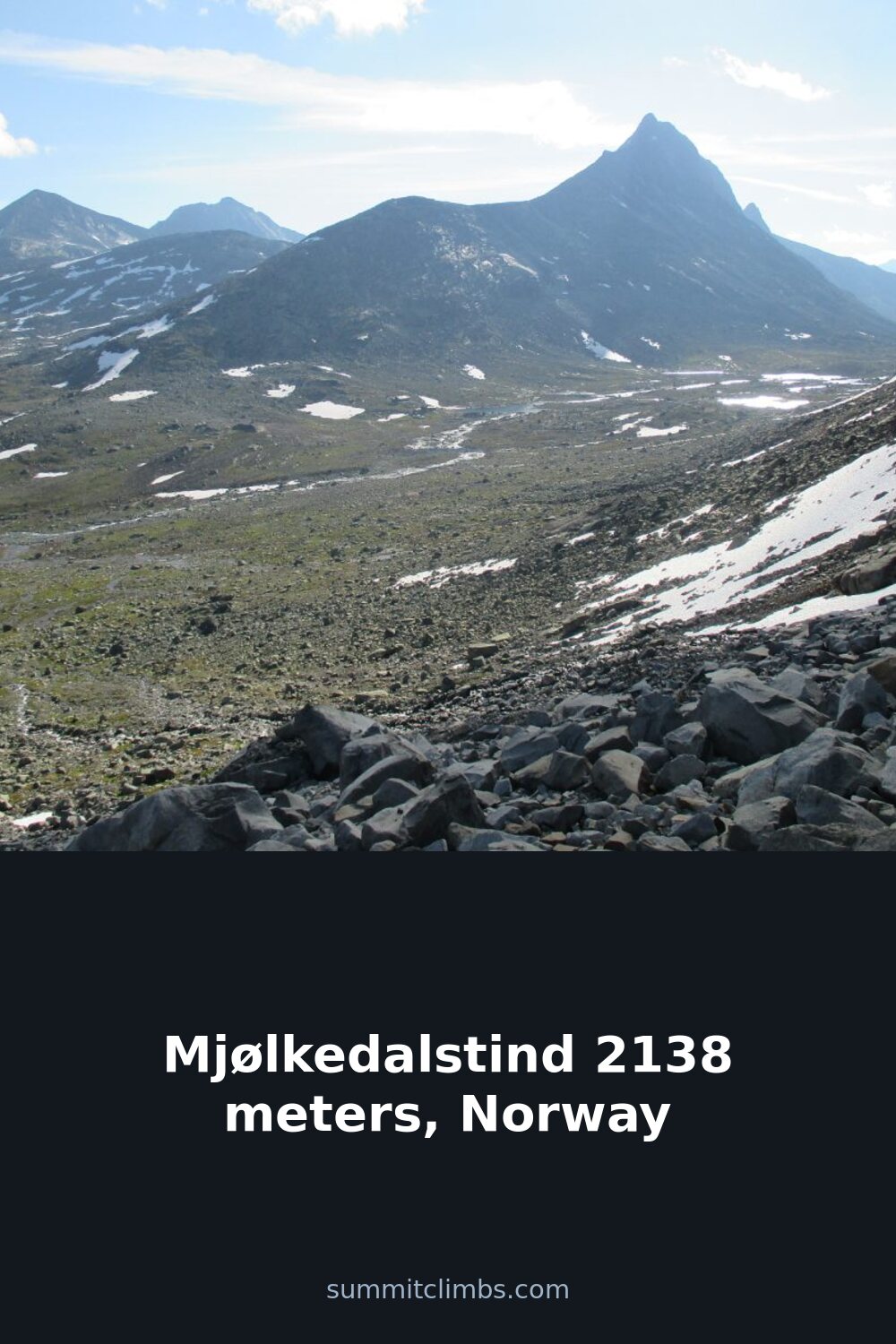
SummitClimbs Field Note: Mjølkedalstind is one of those peaks that plays tricks on you. From a distance—from the high ridges of Jotunheimen or across a valley floor—it looks like a serious proposition. Steep, sharp, and dark against the sky. But the climb itself is more generous than its appearance suggests. At 2,138 meters, it is not the highest in the area, but it earns its reputation through position and view. This is a summit that rewards a direct approach and a clear head, not a long sufferfest.
Why This Place Belongs on a Norway Mountain Plan
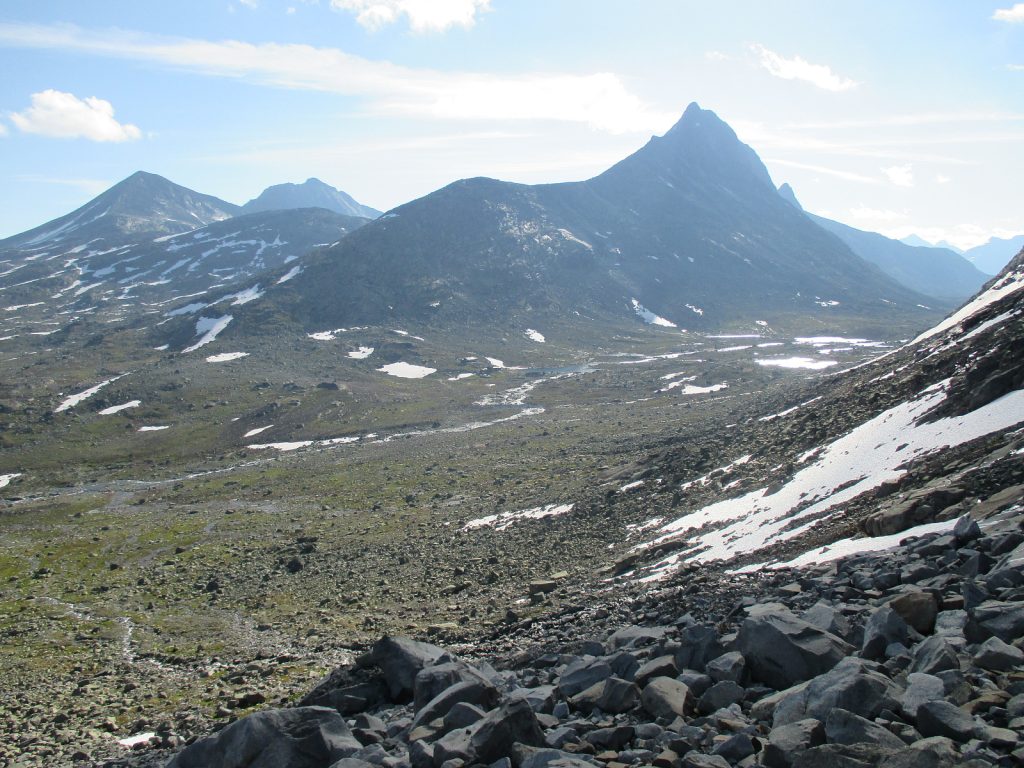
Jotunheimen is full of peaks that demand respect, but Mjølkedalstind is one that gives back immediately. It sits in the middle of a dense cluster of high ground, visible from many of the classic routes and summits in the region. You see it from Leirvassbu, from Skogadalsbøen, from the long traverses. And it keeps drawing your eye. That is the kind of peak worth climbing—not because it is the hardest, but because it is the one you keep looking at.
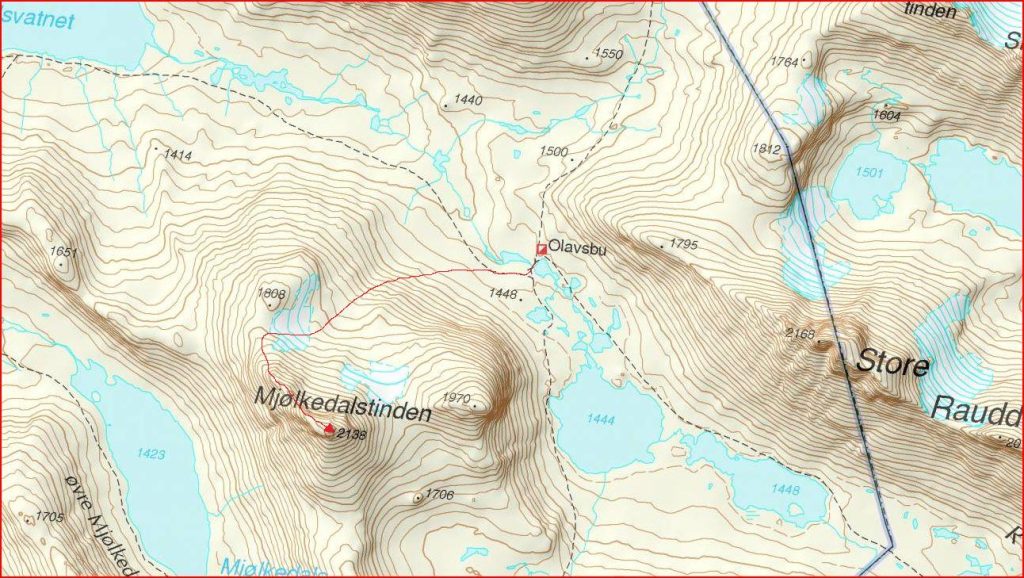
What makes it practical is the access. Olavsbu hut sits at 1,440 meters, which means you start high and stay high. The climb from there is short enough to do as a day trip from the hut, and the route is straightforward when conditions are stable. This is not a peak that requires a multi-day commitment. It is a summit you can slot into a larger itinerary, or make the centerpiece of a shorter trip if the weather window is tight.
The SummitClimbs Snapshot
- Height: 2,138 meters
- Starting point: Olavsbu hut (1,440 m)
- Approach: From Leirvassbu, Skogadalsbøen, Fondsbu, or Gjendebu
- Route style: Ridge walk with some exposed sections; not technical but requires care on loose ground
- Best for: Mountain hikers with solid navigation skills and comfort on exposed terrain; not for beginners on a bad day
Route Reality and Local Conditions
The standard route from Olavsbu is efficient and logical. You leave the hut and walk over the cliff directly below the lower cabin. There is a ladder here—the kind that has been in place for years, maintained by the Norwegian Trekking Association. It takes you down toward Skogadalsbøen. Do not follow the trail all the way. Instead, turn left and aim for the ground west of the summit. This is where the ridge begins, and from that point the route follows the crest to the top.
The ridge itself is the key. It is not knife-edge, but it is exposed in places, and the rock can be loose. In dry conditions, the grip is fine. After rain or early in the season with snow patches, it demands more attention. The final section to the summit is a straightforward scramble, nothing that requires rope work, but you should be comfortable using your hands and placing your feet deliberately.
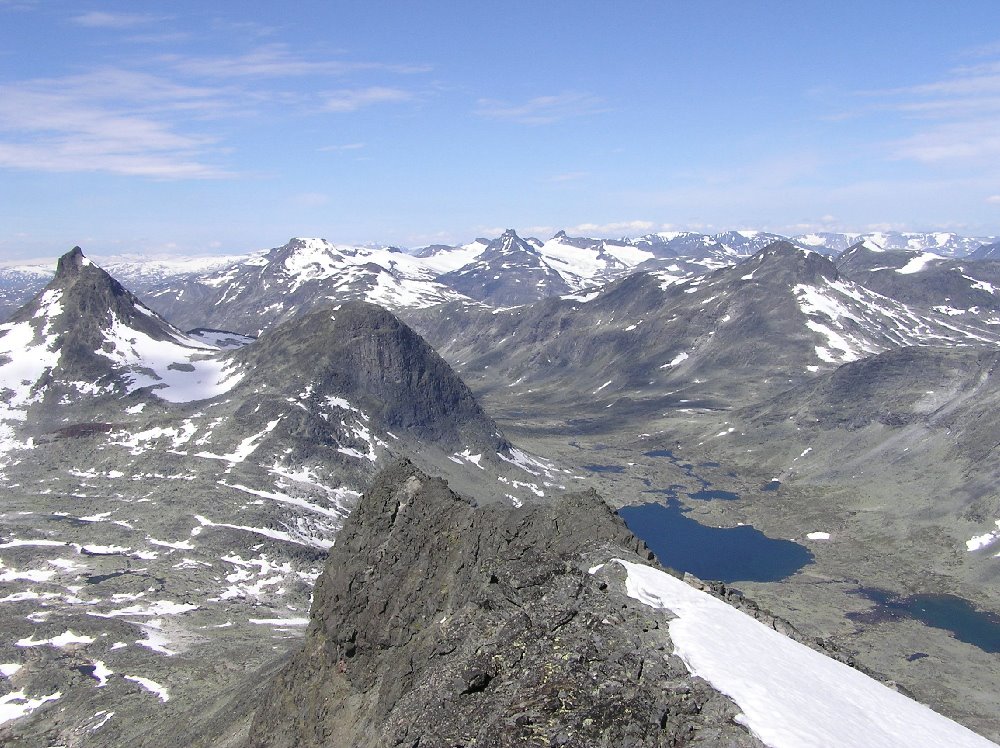
Time-wise, this is a short day from Olavsbu. Most parties will be up and down in under four hours, including breaks. That leaves the afternoon for other plans or simply sitting on the summit and taking in the view. The view is the point. From the top, you are in the middle of the Jotunheimen massif. Peaks in every direction, valleys dropping away, and the sense that you are standing on a platform above the whole range.
What to Watch For
First, the ladder. It is a fixed installation, but it can be slippery, especially in wet weather or early morning frost. Take your time. Second, the ridge. It is not difficult, but the exposure increases as you gain height. If the wind is strong, the ridge becomes a different proposition. Turn around if conditions feel wrong—this peak will wait for another day.
Third, navigation. The route is obvious in clear weather, but Jotunheimen is notorious for rapid cloud cover. A sudden fog can turn a simple ridge walk into a disorienting problem. Carry a map and compass, and know how to use them. GPS is fine as a backup, but batteries die in cold, and signal is not guaranteed in the valleys.
Finally, other parties. Mjølkedalstind is popular, and on a fine weekend in summer, you will share the ridge. That is fine, but be aware of loose rock kicked down by climbers above you. Give space, call out if you dislodge anything, and do not crowd the summit. The view is best when you have a moment to yourself.
The SummitClimbs Take
Mjølkedalstind is a peak that delivers more than its difficulty suggests. It is not a test piece. It is a summit you can climb in a morning, with a good hut start and a clear ridge, and still have time to enjoy the rest of the day. But it is also a mountain that demands respect for its exposure and its weather. Treat it with the same seriousness you would any Jotunheimen peak, and you will be rewarded with one of the finest viewpoints in the range.
For the SummitClimbs reader, this is a peak to slot into a larger plan. Use it as a warm-up for bigger objectives, or as a standalone day when the forecast is uncertain. Either way, it belongs on your Norway mountain plan. Not because it is famous, but because it is good.
Keep the Trails Alive
Summit Climbs is free — no ads, no paywalls, no sponsored fluff.
Every guide is written from real experience to help your next adventure.
If it helped, a small support means the world and keeps the site running.