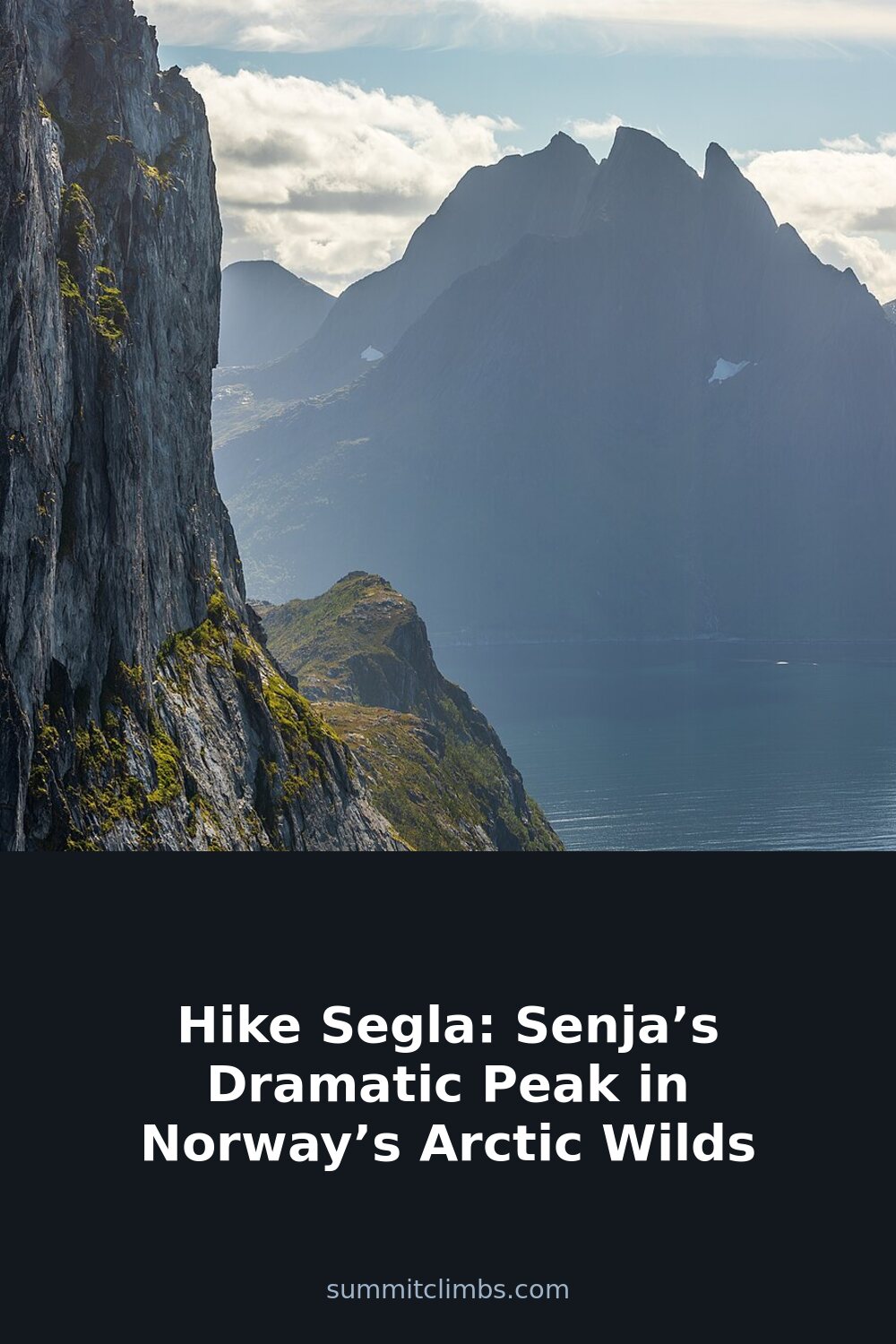
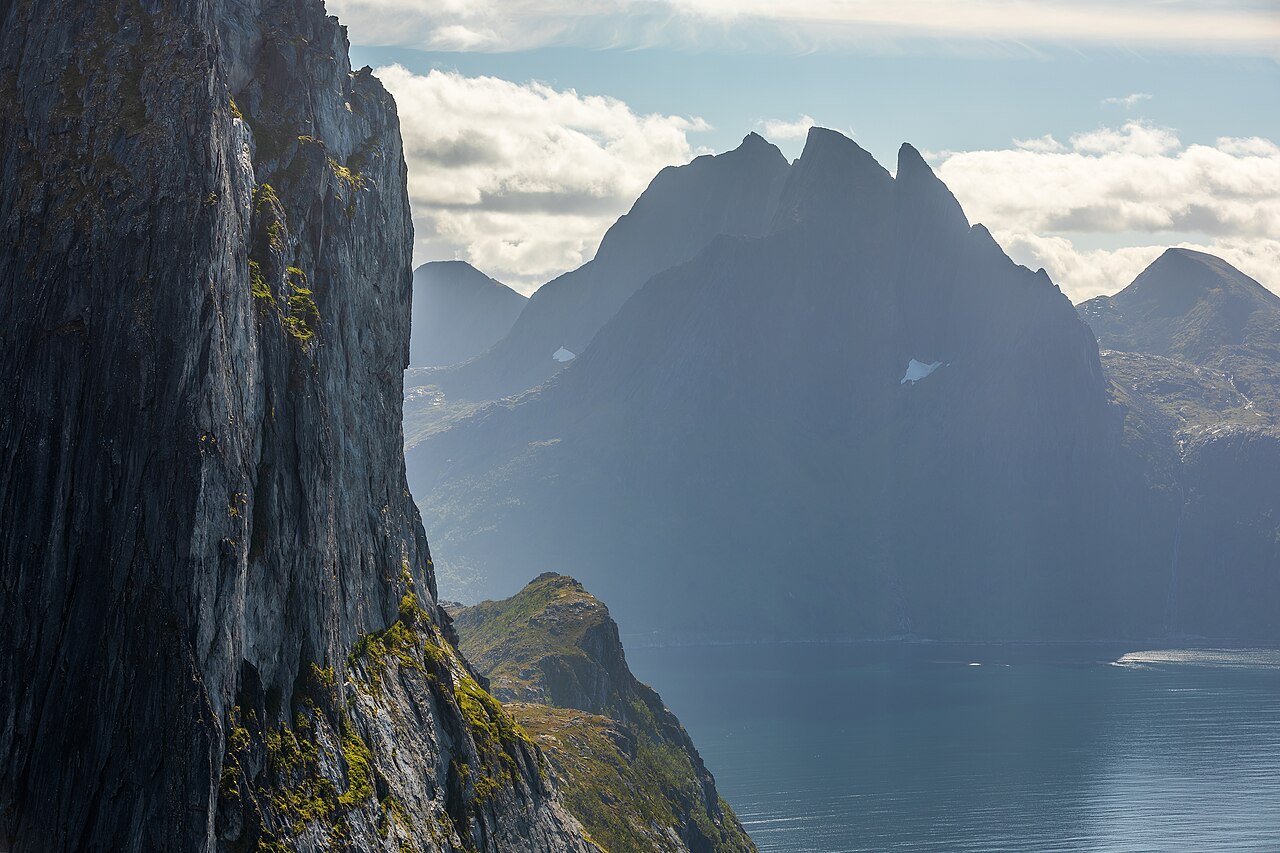
SummitClimbs Field Note: Segla is not a secret. Anyone scrolling through images of northern Norway has seen that sharp, triangular silhouette cutting into the Arctic sky. But there is a difference between seeing a photo and standing on that summit ridge with the Norwegian Sea stretching to a horizon that does not end. This is a short, steep, exposed hike on the island of Senja—a place that feels like the Lofoten Islands but without the queues. The mountain delivers exactly what it promises: a dramatic, hands-on scramble to a summit that drops straight into the sea. It suits fit hikers who want a half-day challenge with big views, not a technical climb. Weather is the real gatekeeper here. Respect it, and Segla is one of the most satisfying peaks in Arctic Norway.
Why This Place Belongs on a Norway Mountain Plan
Norway has no shortage of iconic mountain hikes. Trolltunga, Preikestolen, and Kjerag draw crowds that queue for summit photos in peak season. Segla is different. It sits on Senja, Norway’s second-largest island, which most international visitors overlook on their way to Lofoten. That means you can hike a peak that looks as dramatic as anything in the country—sheer granite walls, a narrow summit ridge, endless ocean views—and still find solitude if you time it right.
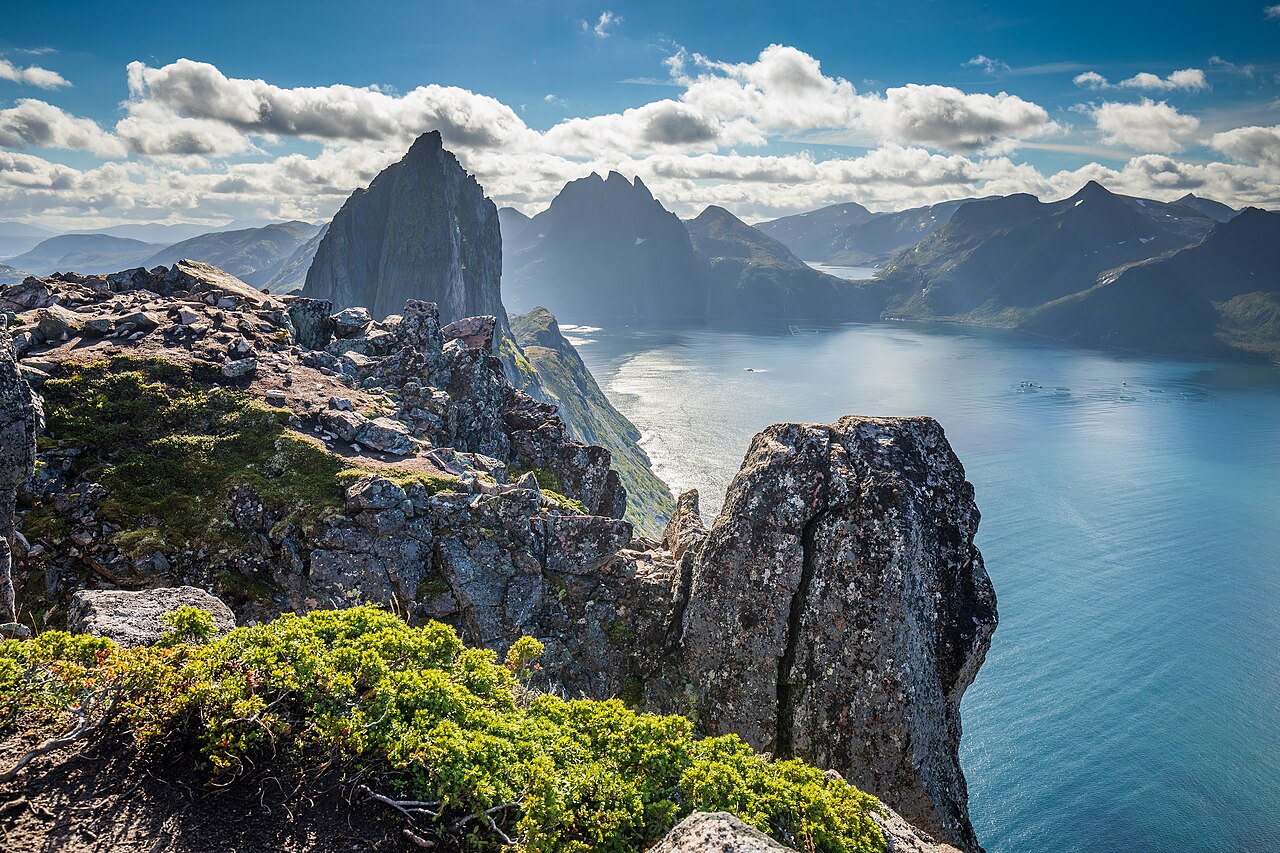
Segla rises directly from the sea near the village of Fjordgård. Its name means “the sail” in Norwegian, and the profile matches: a steep, triangular face that dominates the skyline. The hike is only about 2.5 kilometres one way, but it gains roughly 600 metres of elevation. That ratio—short distance, serious elevation—makes it a different kind of challenge. You are climbing hard from the first step. The reward is a 360-degree panorama that includes the Vesterålen archipelago, the distant Lofoten Islands, and the raw, windswept interior of Senja itself.
For hikers building a northern Norway itinerary, Segla fits naturally as a half-day objective. It pairs well with other Senja highlights: the fishing village of Husøy, the viewpoint at Bergsbotn, or the longer traverse to the neighbouring peak of Hesten. It is not a beginner hike, but it is accessible to anyone with solid fitness and a tolerance for exposure.
The SummitClimbs Snapshot
- Location: Senja island, Troms county, northern Norway. Trailhead near Fjordgård village.
- Distance: Approximately 2.5 km one way to the summit.
- Elevation gain: Roughly 600 metres.
- Time: 3–5 hours round trip for most hikers.
- Difficulty: Strenuous. Steep, rocky trail with exposed ridge sections and a final scramble. Requires hands for balance in places.
- Season: Late June to early September for standard conditions. Snow and ice persist into June. Winter ascents are for experienced mountaineers only.
- Best for: Fit hikers comfortable with exposure and loose terrain. Not suitable for beginners, those with a fear of heights, or anyone unprepared for rapid weather changes.
Route Reality and Local Conditions
The trail begins at a well-marked parking area near Fjordgård. From the first step, you gain elevation steadily through birch and willow scrub. The path is narrow and rocky, and footing demands attention. After 30 to 45 minutes, you break above the treeline, and the landscape opens into a wide, tundra-like plateau. This is where the views start to justify the effort.
The trail then follows a narrow ridge. This section is exposed, with steep drops on both sides. Wind is common here, and it can be strong enough to affect balance. The ridge is not technical—there is no fixed rope or via ferrata—but it requires steady footing and a calm head. If the wind is gusting above 40 km/h, this section becomes genuinely hazardous.
The final push to the summit is a scramble over loose granite blocks. The angle is steep, and the rocks shift underfoot. There are no climbing moves harder than a class 2 scramble, but a slip here would have serious consequences. Take your time, test each hold, and avoid this section if the rock is wet or icy. The summit itself is small, with room for perhaps a dozen people. On clear days, the view stretches across the Norwegian Sea to the Lofoten Islands and the Vesterålen archipelago. The descent demands equal care—the loose rock on the scramble section is more treacherous going down than up.
Most hikers complete the round trip in three to five hours. The trail is marked with red T symbols, the standard Norwegian hiking marker, but visibility can drop quickly in fog. A map, compass, or GPS device is wise, even on a clear day.
What to Watch For
Weather is the real variable. Senja sits at the edge of the Norwegian Sea, and weather systems move through fast. A clear morning can turn into fog, rain, and gusting wind within an hour. Check the forecast at yr.no before you start, and be prepared to turn around if conditions deteriorate. The ridge section is not safe in high wind, and the scramble becomes dangerous when wet.
Loose rock is constant. The trail surface is mostly broken granite and scree. It shifts underfoot on both the ascent and descent. Sturdy, ankle-supporting boots with good grip are non-negotiable. Trekking poles help with balance on the lower sections but can be awkward on the scramble.
Exposure is real. The ridge and summit scramble have serious consequences for a fall. This is not a trail for anyone uncomfortable with heights or exposed terrain. If you freeze on narrow ledges, Segla is not the right hike for you.
Parking fills early. The trailhead near Fjordgård has limited space. In July and August, arrive before 8:00 AM or plan for a later start after the morning rush subsides. There are no facilities at the trailhead or on the route.
Winter changes everything. From October to May, the trail is snow-covered and icy. Crampons, an ice axe, and experience moving on steep snow are required. Most hikers should not attempt Segla in winter conditions without prior alpine training.
The SummitClimbs Take
Segla earns its reputation. The hike is short but honest, the views are among the best in Arctic Norway, and the setting on Senja feels wilder and more remote than the more famous peaks to the south. It is not a hidden gem—everyone with an Instagram account has seen the photos—but it is a mountain that delivers exactly what it promises.
The key is preparation. This is not a casual walk. It is a steep, exposed scramble that demands fitness, proper footwear, and a willingness to turn back if the weather turns. Treat it with respect, and you will stand on one of the most dramatic summits in northern Norway, looking out over an ocean that seems to stretch forever. That is the real Segla—not the photo, but the moment after the climb, when the wind drops and the view opens and you understand why this peak matters.
Keep the Trails Alive
Summit Climbs is free — no ads, no paywalls, no sponsored fluff.
Every guide is written from real experience to help your next adventure.
If it helped, a small support means the world and keeps the site running.