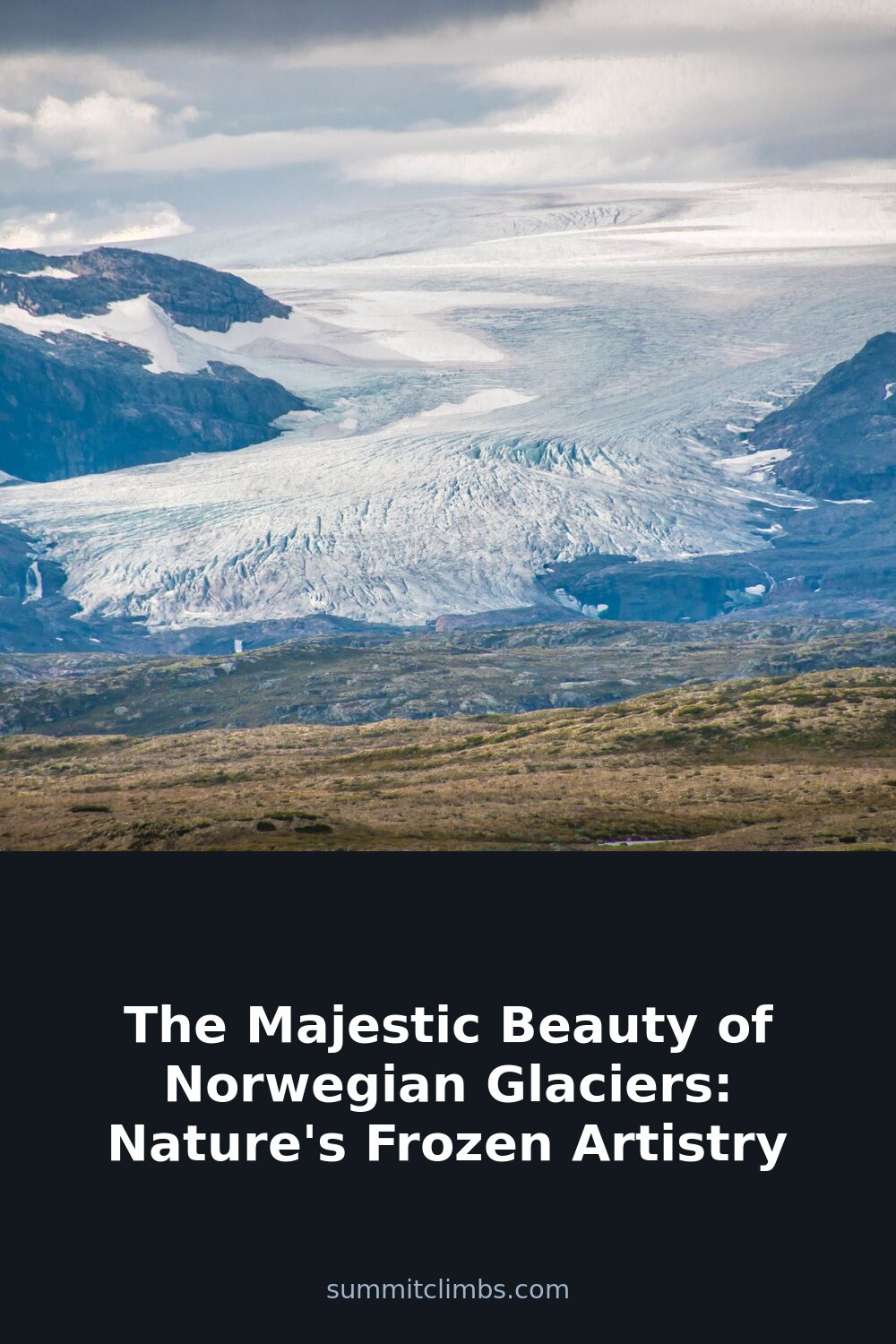
SummitClimbs Field Note: Norway’s glaciers are not museum pieces. They are active, moving, breathing ice that demand respect and reward the prepared. This is not a place for casual roadside gawking—though there are viewpoints—but for those willing to read the terrain, check the forecast, and understand that these frozen rivers are shrinking every year. If you’re building a Norway itinerary that includes glacier travel, here is the practical picture.
Why This Place Belongs on a Norway Mountain Plan
Norway holds some of Europe’s most accessible large glaciers, and that access comes with both opportunity and responsibility. Jostedalsbreen, the largest ice cap on the European mainland, sprawls across 487 square kilometers and feeds dozens of glacial tongues that drop into valleys, lakes, and fjords. You can stand on the ice at Nigardsbreen or Briksdalsbreen without a week-long expedition. Svartisen, split into two distinct ice caps separated by a green valley, offers a different kind of contrast: deep blue ice against summer birch and moss.
These glaciers are not static backdrops. They are dynamic systems—snow accumulates in winter, compresses into firn, and eventually becomes glacial ice that flows downhill under its own weight. That flow creates crevasses, seracs, and moulins. It also means the ice you step on today is not the same ice you would have stood on last year. For the mountaineer, that is the draw. For the planner, that is the variable you cannot ignore.
The SummitClimbs Snapshot
- Primary glaciers for travel: Jostedalsbreen (Nigardsbreen, Briksdalsbreen, Tunsbergdalsbreen), Svartisen (Austre and Vestre), and smaller outlets like Folgefonna and Hardangerjøkulen.
- Best season: Late June through early September. Snow bridges are stable, crevasses are visible, and guided trips run daily. Shoulder months can work for experienced parties with crevasse rescue skills.
- Access: Most outlets are within 1–3 hours of Bergen, Sogndal, or Bodø by car and ferry. Briksdalsbreen is a short hike from parking. Nigardsbreen requires a 3 km walk or boat across the lake. Svartisen involves a boat crossing plus a 3–4 km hike.
- Who it suits: First-time glacier walkers with a guide; intermediate mountaineers with crevasse rescue training; photographers willing to wait for light. Not for unprepared solo hikers—ice is ice, and it does not care about your Instagram.
- What you need: Crampons, ice axe, helmet, harness, prusiks, and knowledge of how to use them. Guided trips provide equipment. If you go unguided, bring a partner who can pull you out of a crevasse.
Route Reality and Local Conditions
The most common glacier route in Norway is the guided walk on Nigardsbreen. You meet at the Jostedalsbreen National Park Center, gear up, cross the lake by boat or foot (depending on water level), and step onto the ice. The guide will show you how to walk in crampons, point out crevasses, and explain the glacier’s structure. The walk itself is not technically demanding—moderate slopes, no steep ice climbing—but the environment is serious. A slip without crampons on hard ice can send you sliding into a crevasse or over a serac edge.
For those with experience, Tunsbergdalsbreen offers longer, more remote terrain. You need to navigate moraine and lateral streams to reach the ice. Once on the glacier, you can traverse south toward the main ice cap or climb a small icefall. This is a full-day commitment with no exit route if weather turns. Check the forecast for Fannaråki or Sogndal before you go. Fog can roll in within minutes, turning a straightforward walk into a whiteout navigation problem.
Svartisen requires a boat from Holand to the trailhead. The boat runs on a schedule—miss it and you wait hours. The hike to the glacier is steep and rocky, gaining 300 meters in under 2 km. On the ice, crevasses are common, especially near the tongue. Guided trips are available from Svartisen Breførerlag. If you go unguided, be prepared for wet ice in summer and soft snow bridges in early season.
Hardangerjøkulen, known to some from the Star Wars filming, is a plateau glacier with fewer crevasses but strong winds. The approach from Finse is a classic ski or hike depending on season. Finse is only reachable by train, so plan logistics around the Bergen Line schedule. The glacier is exposed—no trees, no shelter. If the wind picks up, you need to turn back.
What to Watch For
Weather. Norway’s maritime climate means rain and cloud are normal. A sunny forecast can become drizzle by midday. On glaciers, that drizzle freezes into a hard crust that makes cramponing tricky. Check yr.no or storm.no. Look at the forecast for 1,500 meters, not the valley.
Crevasses. They are everywhere. Snow bridges hide them. A bridge that held in the morning can collapse by afternoon as the sun warms the snow. Rope up, stay spaced, and probe if you are unsure. Guided groups will cross one at a time. Unguided parties should do the same.
Retreat. Every major glacier in Norway has been shrinking. Jostedalsbreen has lost significant volume since the 1990s. The ice front at Nigardsbreen has pulled back hundreds of meters. This means the walk from the parking lot to the ice gets longer every year. It also means the glacier is less stable near the terminus—calving ice and falling seracs are real hazards.
Water. Glacial rivers are cold, fast, and changeable. Do not attempt to cross a glacial river without a guide or a clear safe crossing. The water level can rise in minutes if it rains upstream. A dry streambed at 10 a.m. can be a torrent by 2 p.m.
The SummitClimbs Take
Norway’s glaciers are worth the trip, but they are not a casual stop. They are dynamic, dangerous, and diminishing. The best way to experience them is with a guide—not because you lack skill, but because local knowledge of crevasses, melt patterns, and weather windows is irreplaceable. If you have crevasse rescue training and a partner you trust, the unguided routes on Tunsbergdalsbreen or Hardangerjøkulen offer a different kind of reward: solitude, self-reliance, and a direct encounter with moving ice.
Either way, go soon. These glaciers will not be the same in ten years. The ice you walk on is already younger than the mountains around it. That is the reality of Norway’s frozen artistry—it is beautiful, but it is also temporary. SummitClimbs recommends treating it with the seriousness it deserves, and the wonder it still inspires.
Keep the Trails Alive
Summit Climbs is free — no ads, no paywalls, no sponsored fluff.
Every guide is written from real experience to help your next adventure.
If it helped, a small support means the world and keeps the site running.