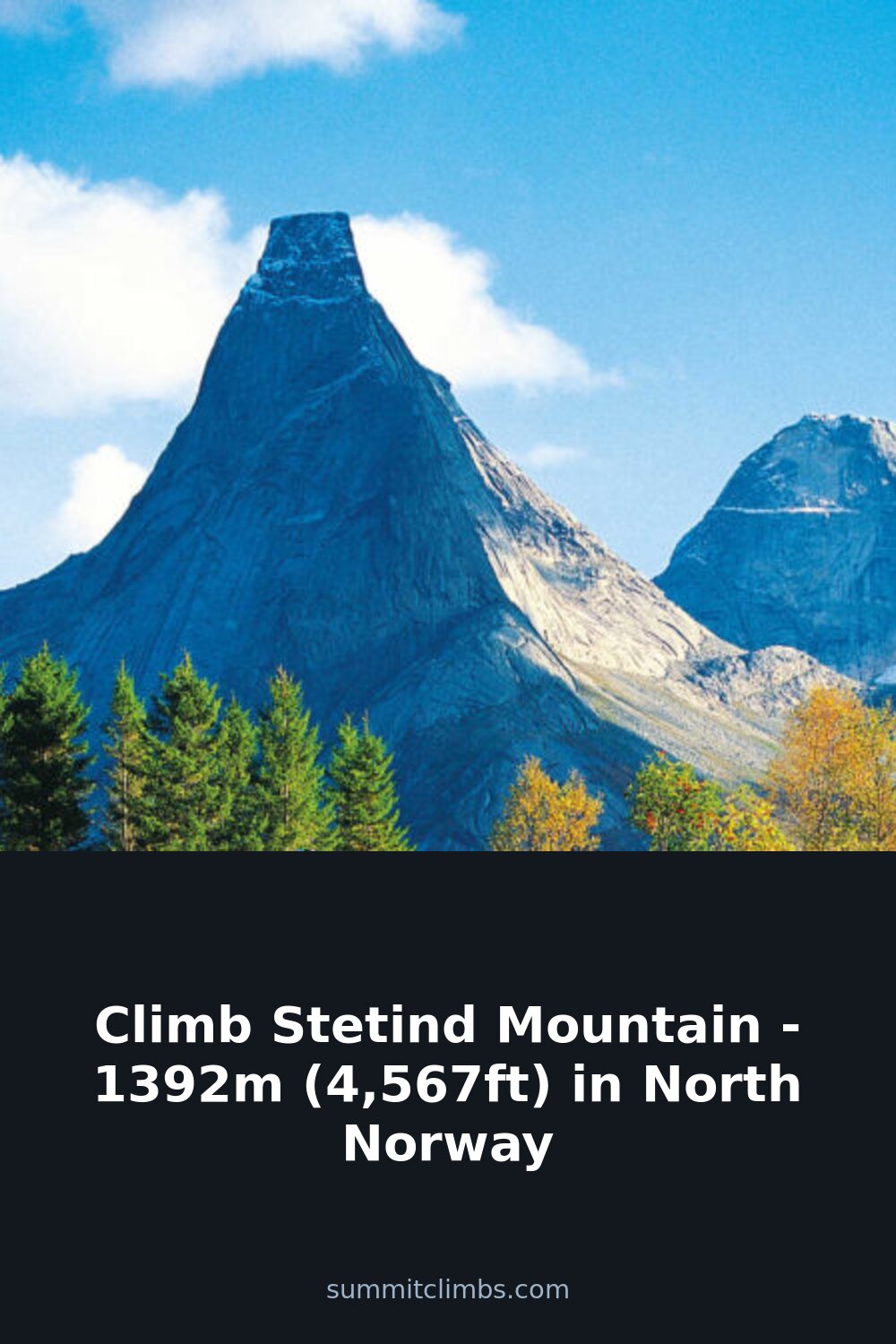
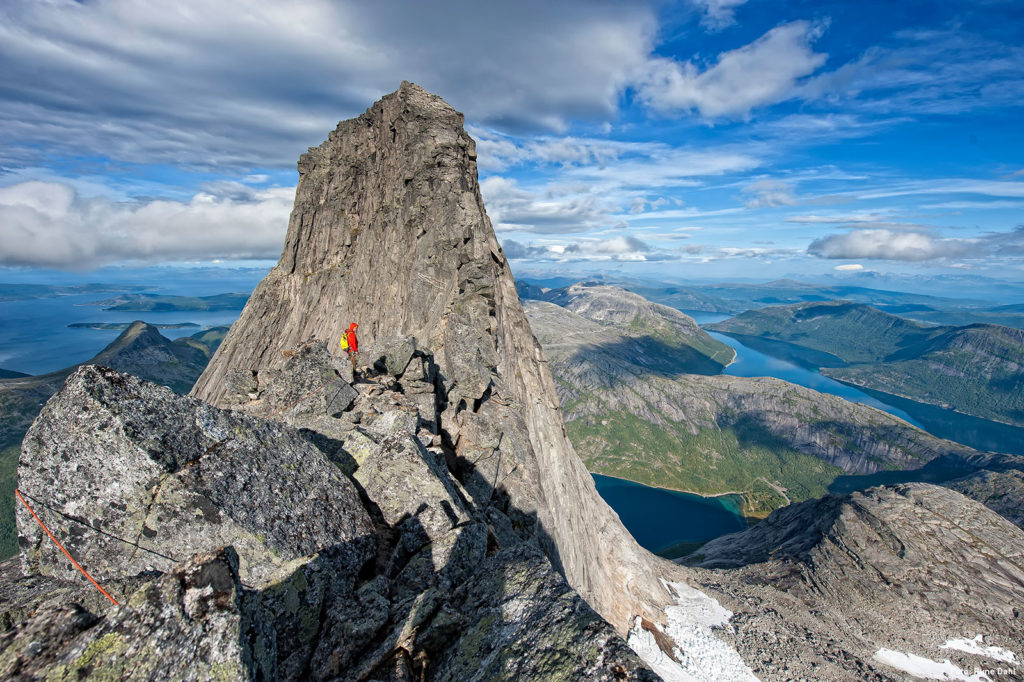
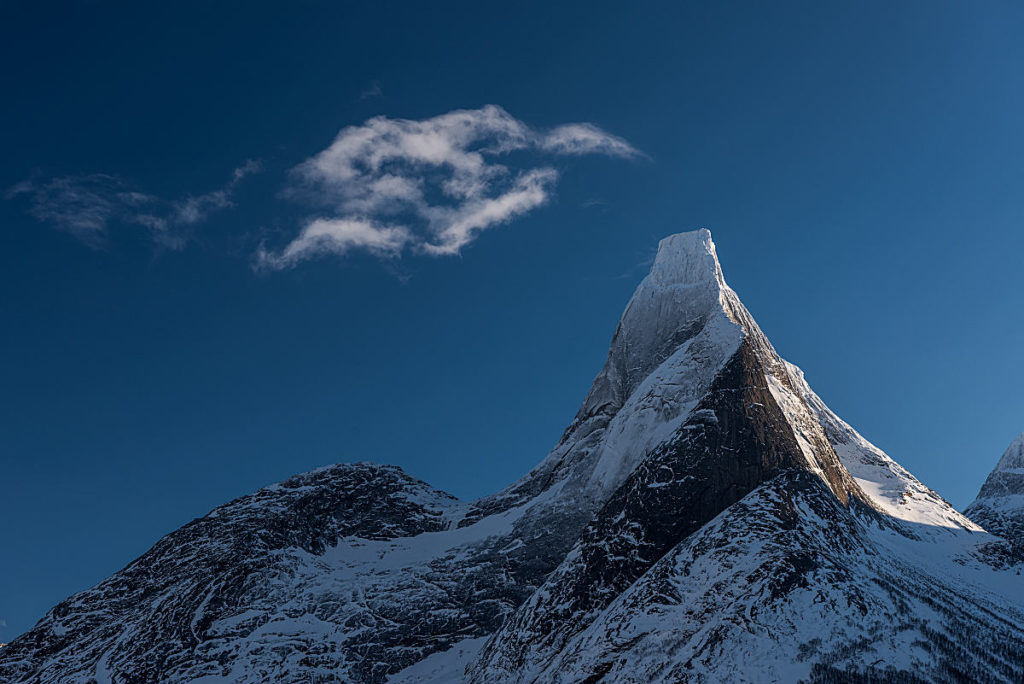
SummitClimbs Field Note: Stetind is not a mountain you stumble into on a casual Norwegian road trip. At 1,392 meters, it punches above its height because of its obelisk shape and the 800 meters of vertical air beneath the crux. This is a day for climbers who carry a rope, know their belays, and respect the long approach. The views over Tysfjorden and the surrounding Nordland peaks are exceptional, but the route demands full attention from the first step to the summit ridge.
Why This Place Belongs on a Norway Mountain Plan
Stetind—also called Stetinden or Stádda in Lule Sami—sits about 15 kilometers northeast of Kjøpsvik in Narvik Municipality, Nordland County. Its smooth granite sides rise directly from the fjord, making it one of the most visually arresting peaks in Arctic Norway. The mountain was chosen as Norway’s national mountain in a 2008 public vote, which tells you something about its cultural pull. But for climbers, the appeal is simpler: a clean, technical line on a standalone peak that feels like a natural monument.
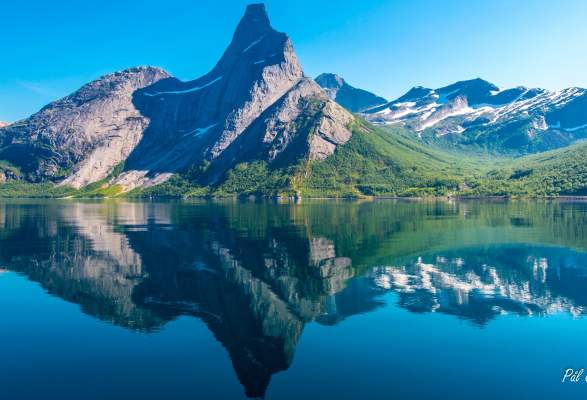
The first ascent came late, on July 30, 1910, when Ferdinand Schjelderup, Carl Wilhelm Rubenson, and Alf Bonnevie Bryn reached the top. Earlier attempts by Paul Güssfeldt, Martin Ekrol, Carl Hall, and even the legendary William Cecil Slingsby all failed. Rubenson, celebrating his 25th birthday, stepped first onto the summit after the crux section known as Mysosten—a smooth rock slab he crossed using only his fingertips. That same trio went on to climb Svolværgeita and Trakta in Lofoten later that same trip. Winter and west-face first ascents came later, in 1963 and 1966 respectively, led by Arne Næss. The route has not changed much since. That is part of its draw.
The SummitClimbs Snapshot
- Height: 1,392 meters (4,567 feet)
- Location: Narvik Municipality, Nordland, about 15 km northeast of Kjøpsvik
- First ascent: July 30, 1910, by Schjelderup, Rubenson, and Bryn
- Typical climbing time: 10 to 14 hours round trip, depending on party speed and conditions
- Technical crux: A 15–20 meter section rated Norwegian class 4+ (roughly equivalent to low 5th class in the Yosemite system)
- Exposure: The crux sits above an 800-meter cliff—this is not a scramble
- Best suited for: Climbers with solid trad experience, comfort on exposed granite, and the ability to move efficiently on multi-pitch terrain. This is not a beginner peak.
Route Reality and Local Conditions
The standard route follows the original 1910 line. From the parking area near the fjord, expect a sustained approach on good trail before the terrain steepens into blocky granite and then the exposed slab work. The crux section, Mysosten, is a smooth, nearly featureless slab that requires precise footwork and a cool head. Protection is available but not abundant—place your gear carefully and trust your feet.
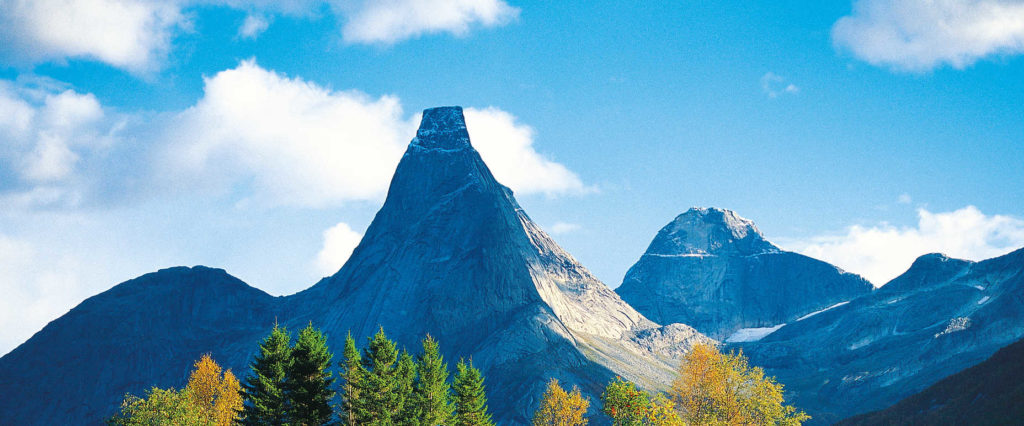
Below the crux, the route is mostly scrambling with some easy climbing. Above it, the difficulty eases to a pleasant ridge walk to the summit. The entire climb is on clean granite, which dries quickly after rain but can be dangerously slick when wet or iced. The summit itself is small but offers a panoramic view over Tysfjorden, the surrounding peaks, and the open sea beyond.
Descent is by rappel or down-climbing the same route. Most parties rappel the crux section to save time and reduce risk. Plan for a full day. The 10-to-14-hour estimate is realistic for a fit, experienced team moving efficiently. Add time for routefinding, gear management, and weather delays.
Weather in Nordland is famously changeable. Fog can roll in without warning, and rain or snow is possible even in summer. The rock becomes treacherous when wet. If the forecast shows instability, postpone. The approach is long enough that turning around after the crux is a serious commitment.
What to Watch For
- Exposure: The 800-meter drop below the crux is real. One slip there is unrecoverable. Climb with a rope, place solid gear, and stay focused.
- Routefinding: The line is generally obvious on the lower sections, but the crux area can be ambiguous. Study photos and topos before you go. A local guide is a good investment for first-time visitors.
- Rock quality: The granite is generally excellent, but loose blocks exist on the ledges and in the gullies. Test every hold, especially after winter or spring melt.
- Light: At this latitude, summer daylight lasts well past midnight, but the sun angle can create glare on the slabs. Start early to avoid climbing the crux in direct afternoon sun, when the rock can feel greasy.
- Gear: A standard alpine rack with a set of nuts, cams to about 3 inches, and several slings for extending pieces. Double ropes are recommended for rappelling the crux. Helmets are non-negotiable.
- Local guides: Hiring a guide is not a sign of weakness—it is a sign of respect for the mountain. Several operators in the Kjøpsvik area offer guided ascents. They know the weather patterns, the descent anchors, and the best places to place protection.
The SummitClimbs Take
Stetind is a classic for good reason. It is not the hardest climb in Norway, but it is one of the most memorable. The combination of a long approach, sustained exposure, and a clean granite crux makes it a peak that rewards preparation and punishes complacency. The view from the top—fjord, mountain, and sky stretching in every direction—is worth every step of the approach.
If you are an experienced climber looking for a day that tests your head and your feet, put Stetind on your list. If you are new to technical alpine climbing, build your skills on smaller objectives first. This mountain will wait. And when you are ready, it will give you one of the finest days of climbing in Nordland.
SummitClimbs recommends this climb for parties with solid trad experience, comfort on exposed terrain, and a willingness to turn around if conditions are not perfect. The mountain does not forgive mistakes, but it rewards those who come prepared.
Keep the Trails Alive
Summit Climbs is free — no ads, no paywalls, no sponsored fluff.
Every guide is written from real experience to help your next adventure.
If it helped, a small support means the world and keeps the site running.